The global pressure vessel industry supports refineries, chemical plants, power stations, food processing, and emerging hydrogen systems. Demand is becoming more specialized. According to Grand View Research, the global pressure vessel market is expected to expand steadily through 2030, driven by energy infrastructure, industrial gases, and process equipment investment. MarketsandMarkets reports similar growth trends, particularly across Asia-Pacific and the Middle East. These forecasts are useful, but they are not a complete manufacturer ranking.
An Asme Pressure Vessel manufacturer must demonstrate more than fabrication capacity. ASME Boiler and Pressure Vessel Code certification, especially Section VIII, reflects controlled design, welding, inspection, and documentation procedures. ASME’s official conformity assessment framework remains an important reference for evaluating qualified suppliers. However, certification alone does not prove superior delivery performance. Buyers should also review material traceability, radiographic testing capability, hydrostatic test records, project references, and after-sales support. Small details matter. A clean nameplate and complete inspection dossier can prevent expensive delays later.
This guide examines leading manufacturers worldwide through practical criteria, including engineering depth, production scale, certification scope, export experience, and sector specialization. Public company disclosures, ASME resources, and recognized market studies provide the evidence base. Rankings remain imperfect. Some manufacturers publish extensive data, while private companies disclose very little. That imbalance can influence visibility. Therefore, the strongest supplier is not always the largest one. It is the manufacturer that consistently delivers a correctly engineered vessel, with verified materials, transparent quality records, and dependable support under demanding operating conditions.
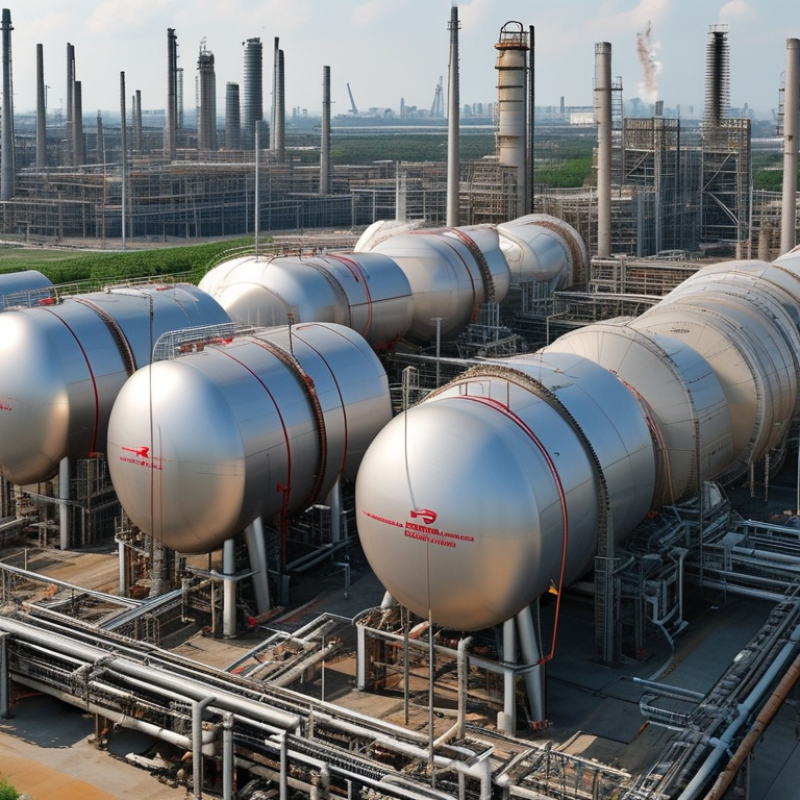
What Defines a Leading ASME Pressure Vessel Manufacturer?
A leading ASME pressure vessel manufacturer delivers more than a stamped nameplate. It controls design, materials, welding, inspection, documentation, and service support. ASME BPVC Section VIII provides the technical framework for pressure vessel construction, but compliance alone does not prove manufacturing excellence.
Strong manufacturers use qualified welding procedures, trained personnel, and full material traceability. They record heat numbers, inspection results, hydrostatic tests, and nonconformance actions. Independent inspections add credibility. The Global CCS Institute’s 2024 Status of CCS report identified more than 50 operating carbon capture facilities worldwide. This growth increases demand for dependable separators, storage vessels, and related equipment. IEA’s World Energy Investment 2024 report also estimated global energy investment above 3 trillion dollars, showing the scale of infrastructure requiring engineered pressure equipment.
Tips: Ask for welding qualification records, inspection plans, and material certificates. Review delivery history for similar pressure, temperature, and corrosion conditions. Visit the workshop if possible.
A polished certificate is not enough. Weak traceability can still create serious lifecycle risks. Leading manufacturers therefore combine documented quality systems with practical engineering judgment. They understand nozzle loads, fatigue, corrosion allowance, and transport stress. Their engineers also explain design limits clearly, without hiding uncertainty. That matters during maintenance and future modifications. No system is perfect. Even experienced teams should review assumptions, especially when operating conditions change. Reliability is built through evidence, not confident language.
| Evaluation Dimension | Verifiable Data or Benchmark | Relevant Standard or Evidence | Why It Defines a Leading Manufacturer |
|---|---|---|---|
| ASME Authorization | Valid authorization to manufacture pressure vessels under the applicable ASME Boiler and Pressure Vessel Code section. | ASME BPVC Section VIII, Division 1 or Division 2; applicable certification scope should match the vessel design. | Demonstrates that the manufacturer operates within a recognized design, fabrication, inspection, and documentation system. |
| Design Engineering Capability | Ability to calculate shell, head, nozzle, reinforcement, support, wind, seismic, fatigue, and external-pressure requirements where applicable. | ASME BPVC Section VIII design rules; Division 2 uses more detailed design-by-analysis requirements for applicable projects. | Reduces the risk of under-designed components, nozzle failures, buckling, and costly engineering revisions. |
| Material Traceability | Controlled material identification from receipt through cutting, forming, welding, inspection, and final documentation. | Material test reports, heat-number control, material specifications, and ASME Section II requirements where applicable. | Provides evidence that pressure-retaining materials meet the specified chemical, mechanical, and dimensional requirements. |
| Welding Qualification | Qualified welding procedures and welders for the material grades, thicknesses, positions, and processes used on the project. | ASME BPVC Section IX for welding and brazing procedure and performance qualifications. | Confirms that welded joints have been produced using controlled and technically qualified methods. |
| Non-Destructive Examination | Access to qualified visual, liquid penetrant, magnetic-particle, radiographic, and ultrasonic examination services as required by the design. | ASME BPVC Section V and the examination requirements specified by Section VIII and the approved inspection plan. | Improves detection of surface and internal discontinuities without damaging the pressure boundary. |
| Pressure Testing | Hydrostatic or pneumatic testing performed under an approved procedure, with calibrated instruments and documented results. | ASME Section VIII testing provisions, including the applicable requirements for hydrostatic or pneumatic tests. | Verifies pressure-boundary integrity before shipment, installation, and commissioning. |
| Quality Management | Documented procedures for contract review, purchasing, inspection, nonconformance control, corrective action, and record retention. | ISO 9001 certification is a useful external indicator, but it should be evaluated together with ASME quality-system controls. | Shows that quality is managed systematically rather than relying only on final inspection. |
| Authorized Inspection | Inspection activities conducted and documented by the required independent or authorized inspection personnel. | ASME conformity-assessment requirements and the applicable inspection provisions of Section VIII. | Adds independent verification of critical design, material, welding, examination, and testing records. |
| Corrosion and Service-Life Design | Documented corrosion allowance or corrosion-control strategy based on process chemistry, temperature, flow conditions, and expected service life. | Project design basis, material compatibility data, and applicable ASME construction rules. | Helps maintain safe wall thickness and operating reliability throughout the planned service period. |
| Global Regulatory Adaptability | Experience preparing documentation for the destination jurisdiction, including design registration, inspection, marking, and import requirements. | Applicable national regulations, the EU Pressure Equipment Directive where relevant, and local registration rules. | Reduces approval delays and supports legal installation and operation in international markets. |
| Manufacturing Capacity | Adequate shop floor, lifting equipment, plate-forming capability, welding capacity, heat-treatment access, and dimensional inspection resources for the specified vessel. | Capacity should be verified against vessel diameter, length, weight, material, thickness, and delivery requirements. | Ensures the supplier can safely fabricate, handle, inspect, and ship the actual equipment rather than only similar smaller units. |
| Technical Documentation | Complete data book containing drawings, calculations, material certificates, weld records, NDE reports, heat-treatment charts, pressure-test records, and nameplate information. | Project specifications, ASME construction requirements, and purchaser documentation requirements. | Supports regulatory review, maintenance planning, future repairs, and long-term asset traceability. |
| After-Sales Support | Clear warranty terms, spare-parts support, repair procedures, field-service capability, and access to technical records after delivery. | Contract-specific service obligations and applicable inspection or repair requirements during the equipment life cycle. | Protects uptime and provides a controlled response to inspection findings, modifications, and operational changes. |
Note: Actual requirements depend on the vessel design, service conditions, governing code edition, destination jurisdiction, and purchaser specifications.
: It controls design, materials, welding, inspection, testing, and documentation. It requires consistent production, not one successful vessel.
Engineers check pressure limits, nozzle reinforcement, corrosion allowance, and repeated-load effects. Small calculation gaps can become serious.
Material certificates link steel plates to heat numbers and the finished vessel. This creates a paper trail.
Review welder qualifications, welding procedures, repair records, and heat treatment data. Rejected welds deserve honest attention.
It can reveal leaks, weak connections, or unexpected deformation before service. It is useful, but not magical.
No. Poor maintenance, incorrect operation, and later design changes can still create hazards. Certification is evidence, not a promise.
Verify its exact certification scope, inspection arrangements, material groups, and production capacity. Do not trust a logo alone.
Request inspection reports, welding qualifications, test certificates, repair histories, and final manufacturing records. Compare them with project requirements.
Independent inspectors can review radiographs, ultrasonic results, dimensions, and pressure tests. Their distance may expose overlooked problems.
Missing documents, unclear subcontractor control, poor storage, expired calibration labels, and unexplained schedule pressure are warning signs. Fast delivery is not always good.
Choosing a leading Asme Pressure Vessel manufacturer requires more than comparing prices or production volume. A reliable supplier demonstrates strong engineering expertise, consistent quality control, certified welding procedures, advanced fabrication equipment, and the ability to manage complex designs and demanding project requirements. ASME certification provides an important foundation by confirming that vessels are designed, manufactured, inspected, and tested according to recognized safety and quality standards, helping reduce operational risks and improve long-term reliability.
Global manufacturers may offer different regional strengths, including specialized materials, large-scale production, customized engineering, efficient logistics, or strong after-sales support. When evaluating potential suppliers, buyers should review certification validity, manufacturing capacity, inspection systems, material traceability, delivery performance, customization capability, and technical service. The right manufacturer should combine compliance, proven workmanship, transparent communication, and dependable project support to deliver a pressure vessel that meets both operational needs and applicable safety expectations.

 Hongke Qingneng