Engineered environmental systems designed for high-capacity sterilization, safe carcass rendering, and clean disposal.
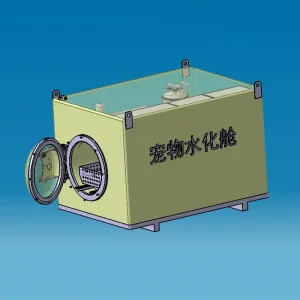
Eco-friendly animal cremation and localized residue bio-security processing plants designed to minimize carbon emissions while eliminating biological pathogens.
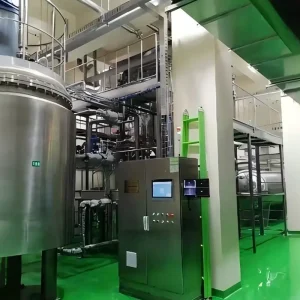
High-pressure sterilization system operating at 133°C and 3 bars. Perfectly designed for veterinary institutes and laboratory biocontainment facilities in Belgrade and Novi Sad.
Fully automated, corrosion-resistant stainless steel autoclaves utilizing clean thermal breakdown technology to yield sterile residues while recovering vital energies.
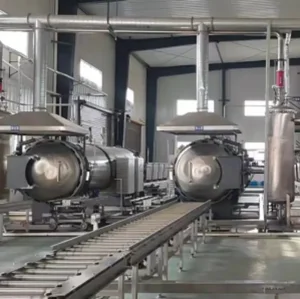
Industrial-scale continuous steam sterilizers configured to safely process high-risk clinical waste, carcass remnants, and biomedical laboratory runoff.
Navigating Chapter 27 Compliance, Bio-Security Risks, and Sustainable Animal Waste Utilization
As the Republic of Serbia accelerates its integration into the European Union, compliance with **EU Environmental Chapter 27 (Environment and Climate Change)** demands a complete modernization of its agricultural and municipal waste management infrastructures. Historically, the handling of animal by-products (ABPs) and biological residues in regions like Vojvodina, Šumadija, and Western Serbia was reliant on traditional landfills or substandard rendering methods. Today, strict veterinary regulations dictate that Category 1, 2, and 3 animal waste must undergo controlled, pressurized, and heat-induced processing to prevent contamination of groundwater and the outbreak of infectious zoonotic pathogens, including African Swine Fever (ASF) and Avian Influenza.
Our company, **Hebei Hongke Qingneng Environmental Protection Equipment Co., Ltd.**, brings to the Serbian market a high-performance portfolio of **thermal hydrolysis reactors, customized pressure vessels, and VOC treatment systems**. These solutions are engineered in alignment with both the European Pressure Equipment Directive (PED) and Serbia's national veterinary inspection regulations. By providing state-of-the-art closed-loop processing systems, we assist local Serbian rendering plants, municipal veterinary institutes, and food processing factories in upgrading their systems from hazardous waste dumps to sustainable waste-to-energy conversion units.
"The modernization of Serbia's rendering sector isn't merely an ecological requirement; it is a bio-security necessity. High-temperature steam and pressure processing guarantee complete pathogen inactivation while extracting clean organic fats and bone meals for industrial recycling."
In the local market, major cities such as Belgrade, Novi Sad, Niš, and Kragujevac are leading the effort to establish centralized medical and veterinary waste handling centers. These centers require high-temperature sterilization systems capable of treating medical residues, lab-infected tissues, and slaughterhouse wastes. As an established manufacturer with an **A2 level pressure vessel fabrication license**, we deliver localized engineering support, skid-mounted modular components for rapid deployment, and specialized auxiliary systems like volatile organic compound (VOC) recovery units to eliminate processing odors.
The shift toward Zero-Emission High-Temperature Thermal Hydrolysis Processes (THP)
On a global scale, the extraction of value from animal processing residues has evolved from simple incineration to advanced circular economy cycles. Modern equipment must render materials sterile while maximizing the recovery of animal fats (tallow) and proteins. The international standard for Category 1 animal waste processing requires heating materials to a core temperature of **above 133°C for at least 20 continuous minutes without interruption**, under an absolute steam pressure of **3 bars**.
This critical thermodynamic threshold is the baseline of our manufacturing process. We produce pressure vessels capable of operating well above these parameters to guarantee absolute destruction of prions, viruses, and heat-resistant spore-forming bacteria, securing the final product for bio-fertilizer or biodiesel production.
Leveraging our close academic ties with the **Institute of Physics and Chemistry Technology of the Chinese Academy of Sciences (CAS)** and **Tsinghua University**, we have developed advanced heat transfer models for mixed working mediums inside our hydrolysis units.
By utilizing specialized shell-and-tube configurations, custom non-standard agitator blades, and highly efficient vacuum cold traps (-135°C), our systems optimize steam consumption, reducing operational fuel costs by up to 25% compared to standard configurations. Additionally, our desulphurisation and VOC containment units capture and scrub toxic gases, providing a fully enclosed, odor-free facility for municipal installation near urban sectors.
Academic backing from the Chinese Academy of Sciences ensuring rigorous engineering quality
Founder & Chairman, PhD (CAS)
Doctorate from the Institute of Physics and Chemistry Technology, Chinese Academy of Sciences. National Senior Engineer who has presided over the National 863 Program, aerospace thermal management systems, and national energy special initiatives. Winner of the Beijing Science and Technology Award.
General Manager, PhD Candidate (CAS)
Senior Engineer at CAS, leading major research projects on non-equilibrium phase changes and cryogenic applications. Author of 24 international academic papers and holder of multiple patents in high-efficiency heat exchangers and skid-mounted industrial gas recovery.
Chief Engineer, Doctor of Engineering (CAS)
Expert in skid-mounted thermodynamic systems, phase change heat transfer, and complex pressure vessel fabrication processes. Oversaw design and implementation of over 50 large-scale cryogenic, VOC treatment, and high-temperature waste recovery systems.
Tailoring modular configurations to meet unique Serbian agricultural and industrial demands
Depending on the nature of the biological residue, our equipment is divided into three processing modules. Below is a specification guideline representing the thermodynamic configuration recommended for Serbian project planners and compliance officers.
| System Classification | Core Processing Technology | Standard Operations Capacity | Serbian Application Scenario |
|---|---|---|---|
| Category 1 Residue Autoclaves | Pressurized Steam Inactivation (133°C, 3 Bar, 20min hold) | 1.5 to 10 Tons per batch | High-risk carcass sterilization (African Swine Fever control in Vojvodina farms) |
| Mobile Animal Harmless Treatment Skids | Integrated Diesel Steam Generator + Shredder + Reactor | 500 kg to 2 Tons per batch | Rapid bio-security response for municipal veterinary offices in remote areas |
| Organic Rendering Dryers (Cat 3) | Thermal breakdown and fat-water separation | 5 to 30 Tons per 24 hours | Slaughterhouse residue drying, protein powder and tallow recovery in Central Serbia |
| Thermal VOC Exhaust Scrubbers | Regenerative Thermal Oxidation (RTO) + Bio-filtration | 1,000 to 15,000 Nm³/h | Odorous gas control at rendering factories near residential zones (Novi Sad / Niš) |
In a recently drafted implementation layout for a veterinary laboratory near Belgrade, our engineering department proposed a fully skid-mounted **High Temperature Hydrolysis Treatment System**. The system consists of an integrated shredder, a horizontal rotating autoclave with a steam jacket, a condensate sterilization vessel, and a continuous carbon absorption VOC filtration unit. This configuration eliminates external piping, allowing for swift containment of experimental animal tissues and preventing pathogens from entering the public sewage network. The unit is compliant with EN 13445 pressure vessel guidelines and holds standard CE certification.
Technical clarifications on animal tissue processing equipment operation and regulations in Serbia
To satisfy Chapter 27 and Regulation (EC) No 1069/2009 (which Serbia follows closely), the equipment must be capable of processing Category 1 and 2 materials at a core temperature exceeding 133°C for at least 20 minutes without interruption at an absolute pressure of 3 bar. The process must use saturated steam with a particle size below 50mm before entering the reactor. Our pressure vessels are manufactured to fully meet these standards and are stamped with relevant safety certificates (CE, A2).
Our systems use closed-loop designs. The vapours produced during the cooking and drying cycles are collected and directed through shell-and-tube condensers. Non-condensable highly concentrated odorous gases are processed through high-temperature thermal oxidation units (or catalytic oxidizers) and secondary biological filters. This guarantees that emissions are clean and comply with Serbia's Law on Air Protection.
Yes, our skid-mounted units are designed for rapid mobilization. Equipped with self-contained power generation, shredders, and chemical/thermal treatment autoclaves, they can be deployed immediately to swine or poultry farms facing outbreaks of African Swine Fever or H5N1, avoiding the risk of transporting infected carcasses across public roads in Serbia.
Yes, our core business is non-standard engineering. With our design office headed by CAS engineering doctors, we calculate, model, and fabricate pressure vessels, condensers, heat exchangers, and reactors tailored precisely to the space limits, material types, and energy sources available at your Serbian factory.
Broader equipment inventory from Hongke Qingneng for natural gas, VOC gas recovery, and custom heavy industry installations in Serbia.
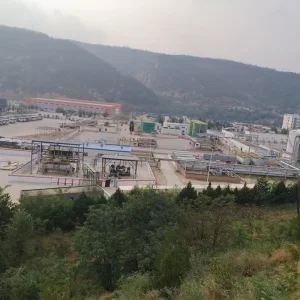
Designed for modern chemical, petroleum, and rendering plants to capture and destroy harmful organic compounds, satisfying strict Serbian clean air indices.
High-tech recovery modules designed to reclaim clean solvents and fuel gases from exhaust systems, turning waste gas into thermal credits.
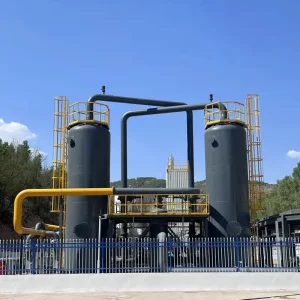
Custom gas scrubbing systems optimized to clean raw biogas and waste exhaust, preventing acid corrosion in recovery engines and thermal reactors.
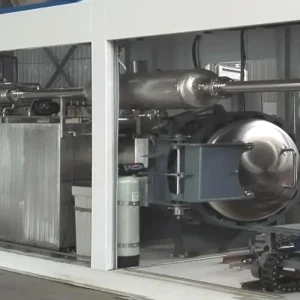
Rapidly deployed mobile units providing emergency biological waste treatment. Features on-board high-temperature steam sterilization systems.
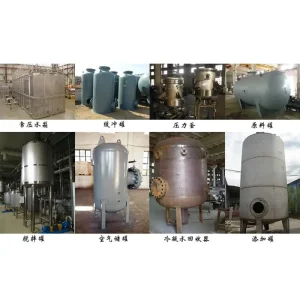
A2-certified design and manufacture of high-pressure storage, heat exchange shells, and bioreactors to meet individual plant footprints and EN codes.
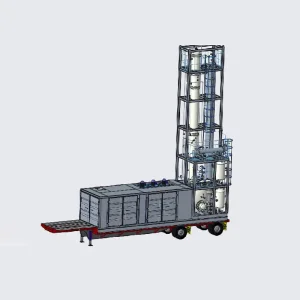
Fully modular natural gas liquefaction skids developed to recover stranded gas resources, ideal for localized biogas purification in farming zones.
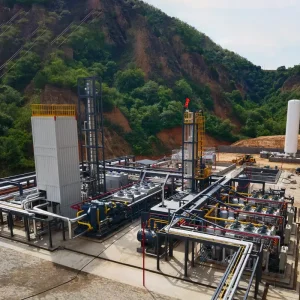
Standard purification and liquefaction modules offering high performance extraction. Fully compliant with modern environmental safety footprints.
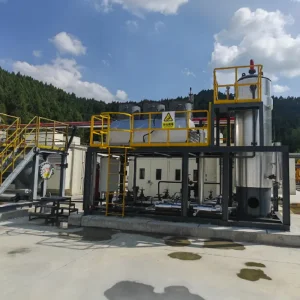
Engineered gas recovery systems designed to eliminate flaring emissions and recover high-purity industrial methane or liquid fractions.
From initial design blueprints to pressure vessel certifications, our CAS-backed engineering team is prepared to custom-build your animal residue treatment, medical waste, or energy recovery installations.
 Hongke Qingneng