 Hongke Qingneng
1 / 1
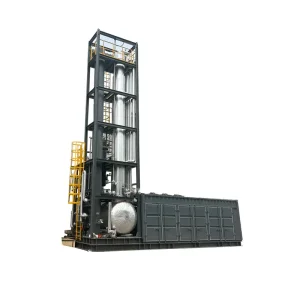
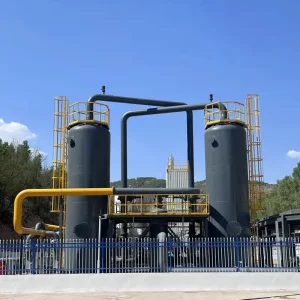
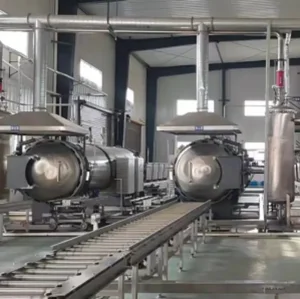
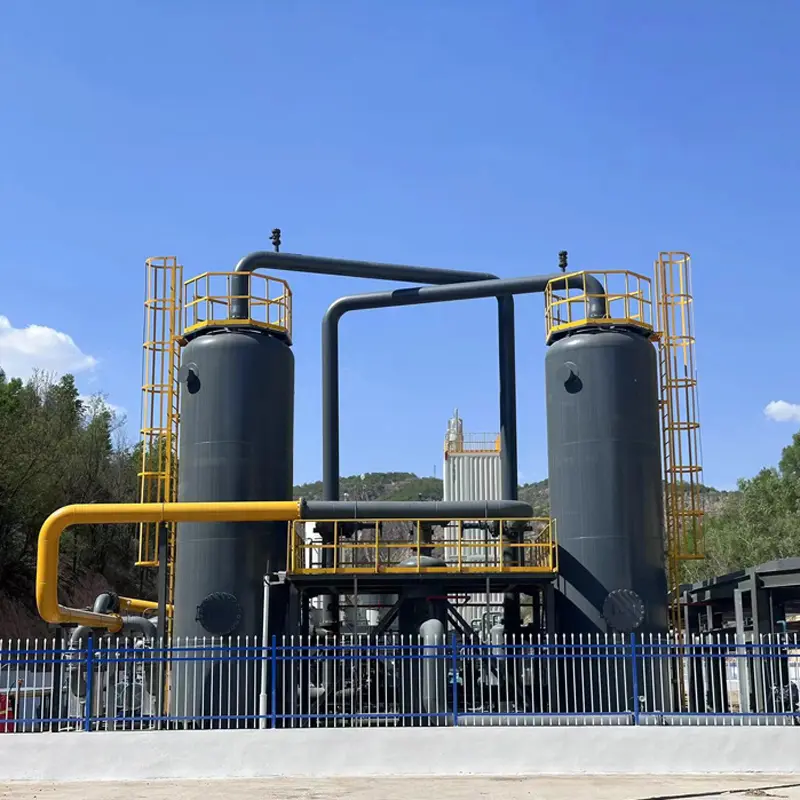
Dry desulphurisation takes fixed-bed desulphurisation tower as the core device, which is filled with oxidising desulphurising agents such as iron oxide and activated carbon. When the sulphur-containing raw gas passes through the desulphurisation tower, H₂S undergoes redox reaction with the desulphurising agent, and is adsorbed and converted into sulphide and fixed in the bed, thus realising deep desulphurisation.
This process has the characteristics of simple process, convenient operation, no need for complex liquid circulation system, etc. It is especially suitable for processing gas with small volume and low sulphur content, and is widely used in remote gas wells and small gas stations. In addition, dry desulphurisation has high operational stability and strong adaptability to fluctuations in working conditions, which can continuously guarantee the purification effect.
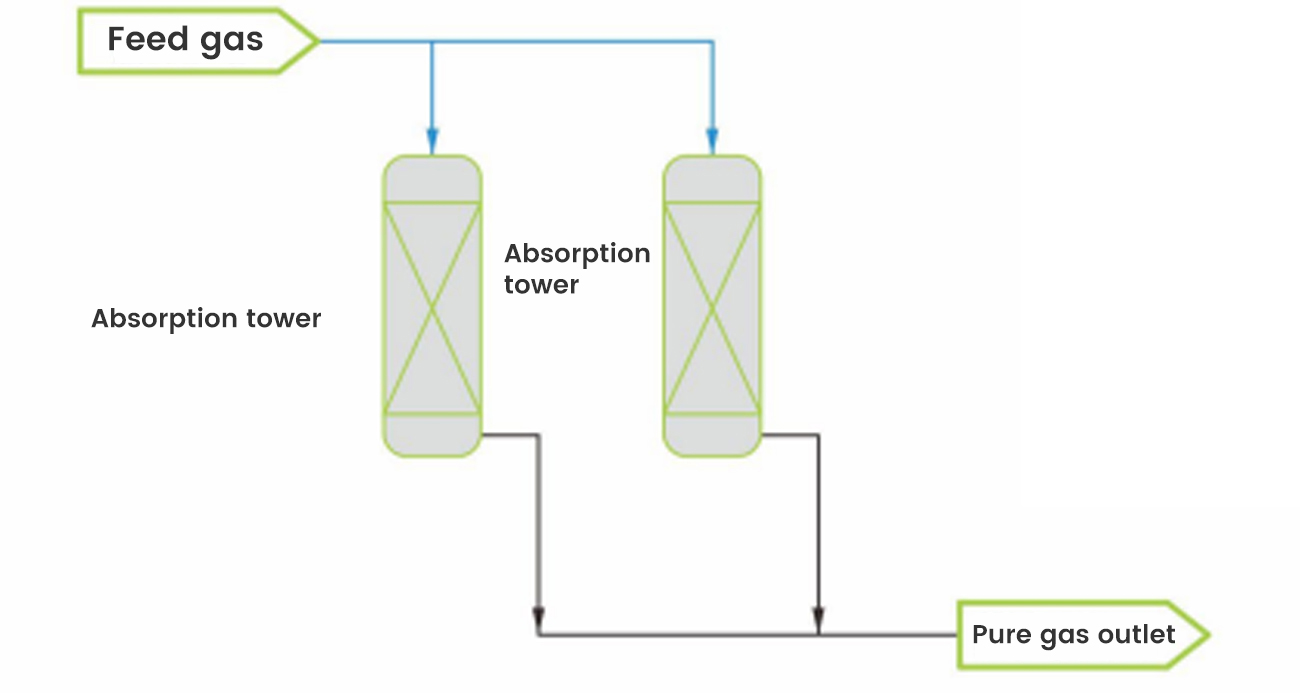
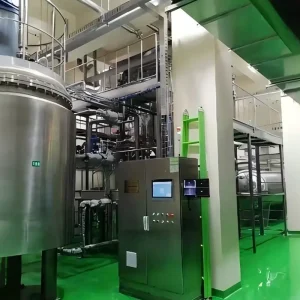
Wet FGD adopts the principle of gas-liquid absorption, after the sulphur-containing raw gas enters the absorption tower, H₂S and the desulphurisation liquid (such as alcohol-amine solution and quebracho solution) sprayed in the tower will fully contact with each other and undergo a chemical reaction, which will be rapidly absorbed and removed, and the purified gas will be fed into the downstream process.
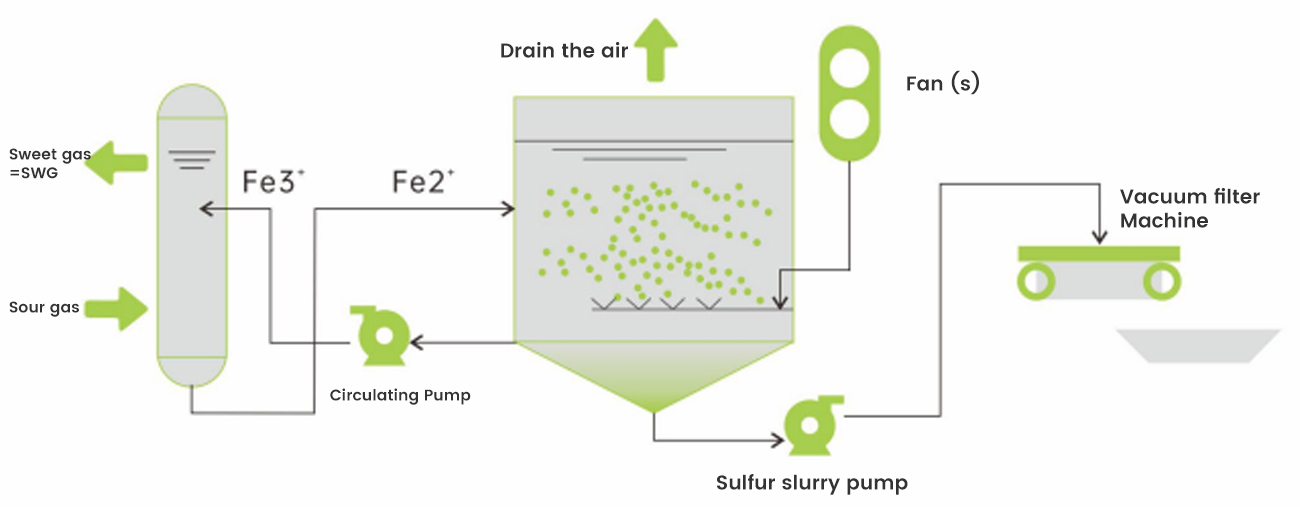
After absorbing H₂S, the desulphurisation rich liquid enters the regeneration tank under reduced pressure, and under the action of air oxidation, H₂S is converted into sulphur monomers to form a foamy suspension. The sulphur foam is extracted through the separation equipment, and finally formed into solid sulphur for export after settling, heating and melting processes. At the same time, the desulphurisation liquid restores its activity and becomes poor liquid, which is pressurised by the poor liquid pump and returned to the absorption tower for recycling. Although the process is complex, it has a large treatment capacity and high desulphurisation efficiency, and can be adapted to high sulphur content working conditions.
The core device of dry desulfurization is the fixed-bed desulfurization tower, which is filled with solid-state oxidizing agents such as iron oxide and activated carbon to adsorb and convert H₂S.
Due to its simple process and lack of complex liquid circulation systems, it is highly suitable for remote gas wells and small gas stations processing small gas volumes with low sulfur content.
Wet desulfurization utilizes the principle of gas-liquid absorption. The sulfur-containing raw gas enters an absorption tower where it contacts and chemically reacts with a sprayed desulfurization liquid (such as alcohol-amine or quebracho solution) to rapidly remove H₂S.
After absorption, the liquid is sent to a regeneration tank where air oxidation converts H₂S to sulfur monomers. This process restores the activity of the liquid (turning it back into poor liquid), which is then pressurized and pumped back to the absorption tower for recycling.
Although wet desulfurization is a more complex process, it offers a much larger treatment capacity and higher desulfurization efficiency, making it highly adaptable to working conditions with high sulfur content.