China Top Industrial Furnace Shell Suppliers & Factories

Custom Heavy-Duty Pressure Vessels, Structural Thermal Barriers & High-Temperature Process Engineering

78M RMB
Registered Capital
A2 Class
Pressure Vessel License
50+ Sets
Skid-Mounted Systems Done
20+ Pat
Independent R&D Patents

Industrial Furnace Shell Manufacturing & Global Procurement Landscape

Industrial furnace shells constitute the structural backbone of high-temperature processing equipment used globally in metallurgy, chemical refining, cement manufacturing, and advanced environmental systems. These shells are engineered to withstand extreme thermal stresses, manage mechanical loads, and secure structural containment under harsh conditions. Ensuring the integrity of an industrial furnace shell directly mitigates energy losses, guarantees operational safety, and extends the lifespan of the refractory lining inside.

As international energy conservation targets and environmental compliance frameworks tighten, the demand for highly optimized, non-standard structural furnace shells has escalated. Global engineering procurement contractors (EPCs) look to China’s industrial bases for solutions that combine robust manufacturing capacity with advanced thermodynamic design. China’s supply chain offers significant advantages in high-precision welding, quality-controlled alloy steel manipulation, and large-scale manufacturing capacity.
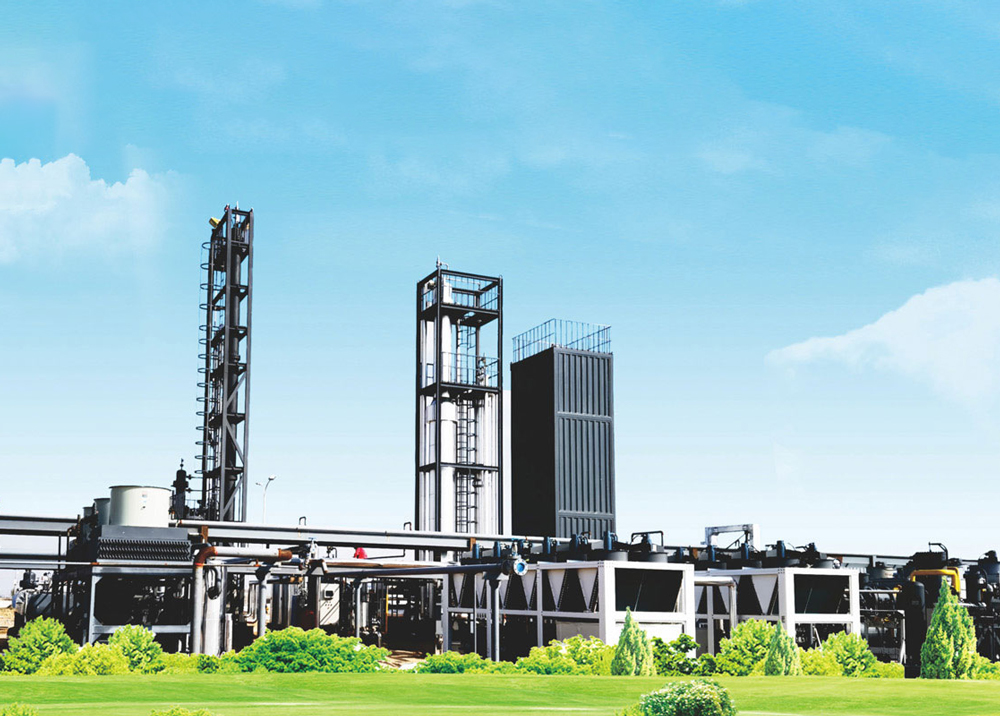
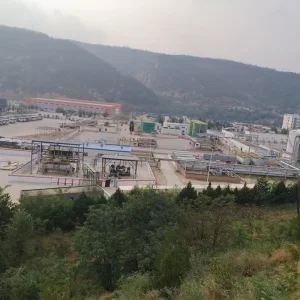
Hongke Qingneng Manufacturing Facility

1. Technical Evolution: Material Science & Structural Design

Modern industrial furnace shells must withstand extreme environments, operating at temperatures ranging from 600°C to well over 1600°C. Engineers must account for key factors like thermal expansion, mechanical stress distribution, and resistance to high-temperature corrosion.

  • Thermal Stress Management: Continuous thermal expansion and contraction cycles can cause structural fatigue, distortion, or weld failure. Custom engineered expansion joints and reinforcing ribs are integrated into the shell design to absorb multi-axial thermal displacement.
  • Refractory Interface Optimization: The shell acts as the secondary containment and pressure barrier behind the refractory bricks or castables. Precise cylindrical roundness (ovality) control is vital; minor deviations can lead to gaps in refractory lining, causing hot spots and premature failure.
  • Advanced Carbon & Alloy Steels: Depending on the process chemistry, shells utilize heavy-duty ASTM/ASME grade steels (such as A516 Gr 70 for pressure-retaining components) or heat-resistant stainless alloys to mitigate oxidation and chemical attacks from gases like sulfur and chlorine.

2. Hebei Hongke Qingneng: Core Competencies and Engineering Pedigree

Established in June 2021 with a registered capital of 78 million yuan, Hebei Hongke Qingneng Environmental Protection Equipment Co., Ltd. has positioned itself as an industry leader in high-temperature containment and heavy industrial processing. Situated in the Sanhe Economic Development Zone, Langfang City, Hebei, the company occupies a vital position within China’s industrial manufacturing corridor.

The company's capability is anchored by a technical team trained at top institutions, including Tsinghua University and the Institute of Physics and Chemistry Technology, Chinese Academy of Sciences (CAS). Combining theoretical research with field implementation, Hongke Qingneng holds an A2 level pressure vessel manufacturing license, alongside certifications for pressure pipeline component manufacturing, ISO 9001 quality systems, and Sinopec HSSE / CNPC Health, Safety and Environment Management Systems.

Academic & Industrial Leadership

Dr. Sun Zhaohu (Founder & Chairman): Ph.D. from the Institute of Physics and Chemistry Technology, Chinese Academy of Sciences. National Senior Engineer. Presided over the National 863 Program, natural science foundation projects, and aerospace initiatives. Holder of the Beijing Science and Technology Award.

Dr. Zou Xin (General Manager): Senior Engineer, CAS Ph.D. candidate. Managed the market implementation of over 50 sets of skid-mounted devices and large-scale industrial containment structures.

Dr. Cheng Kuwei (Chief Engineer): Ph.D. in Engineering from CAS. Expert in mixed working mediums, heat transfer, and complex structural process simulation.

3. Specialized Fabrication Capabilities for Thermal Systems

Hongke Qingneng designs and manufactures heavy-duty components for demanding industrial applications. The company applies structural analysis, certified welding procedures, and rigorous quality inspection protocols to every project.
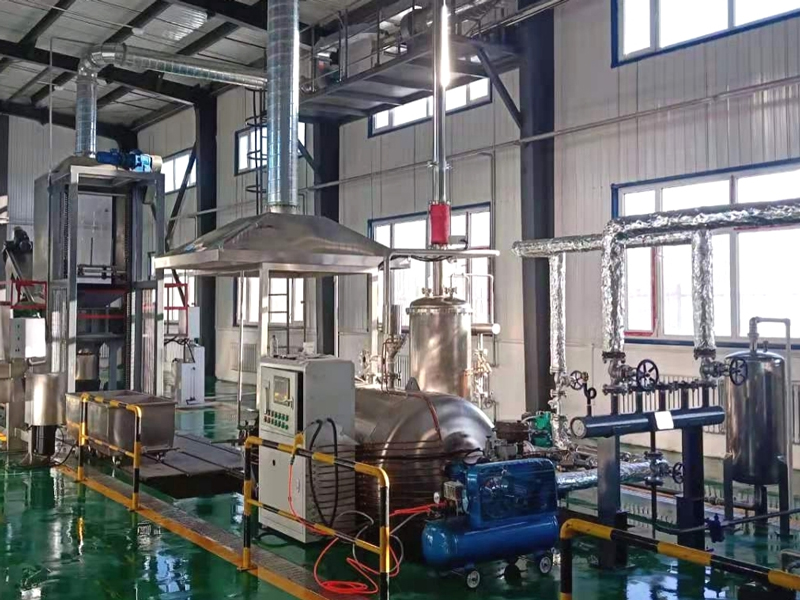
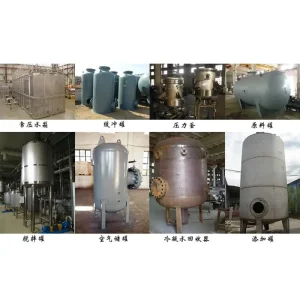
  • Non-Standard Pressure Vessel Design: Fabricating non-standard vessels requires deep knowledge of ASME Sec VIII Div 1 & 2, EN 13445, and GB 150 codes. Our engineers use finite element analysis (FEA) to simulate local stresses at nozzle interfaces, support saddles, and structural transitions.
  • Precision Submerged Arc Welding (SAW): For thick plate shells (ranging up to 100mm+), automated SAW ensures complete penetration welds with high impact toughness, preventing failures under continuous thermal stress.
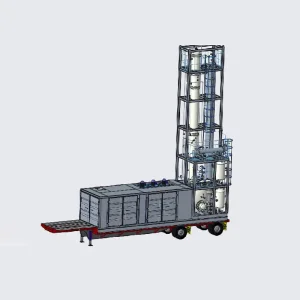
  • Skid-Mounted System Integration: In addition to individual shells, we provide skid-mounted gas processing and waste treatment equipment, enabling easy onsite installation and commissioning.
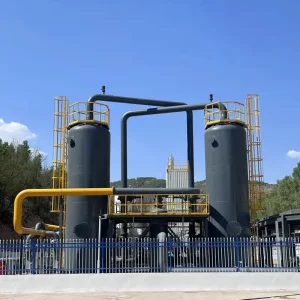
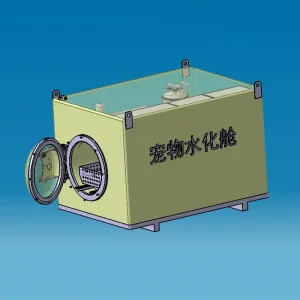
Mobile Medical Waste Treatment Skid

4. Diverse Application Areas & Structural Configurations

We supply specialized shell and containment structures across a wide range of industrial sectors:
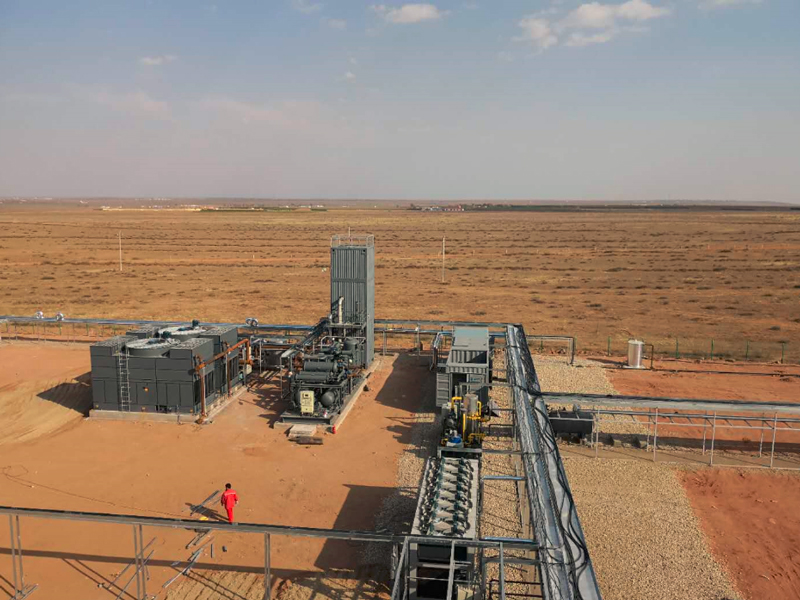
  • VOC Exhaust Treatment Equipment: Heavy thermal oxidizer shells (RTOs, TOs) designed to maintain interior temperatures of 800°C–1000°C while keeping exterior skin temperatures safe, reducing radiative energy loss.
  • Desulphurisation and Scrubbing Towers: Corrosion-resistant alloy-clad shells that withstand hot, acidic flue gas streams in power generation and chemical refining.
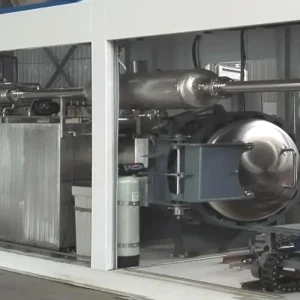
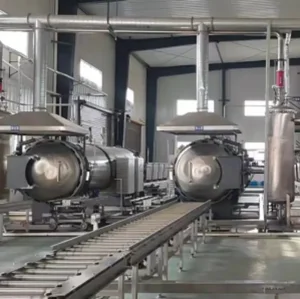
  • Medical Waste Treatment Autoclaves: Thick-walled pressure vessels built for cyclic vacuuming and high-temperature steam sterilization, requiring high fatigue resistance.
  • Cryogenic and LNG Cold Boxes: Inner and outer container shells engineered for structural integrity at temperatures down to -196°C, utilizing specialized high-nickel steel alloys.
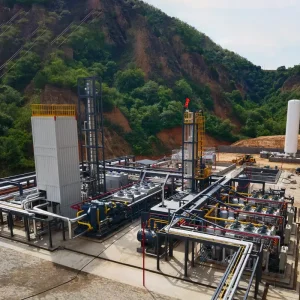
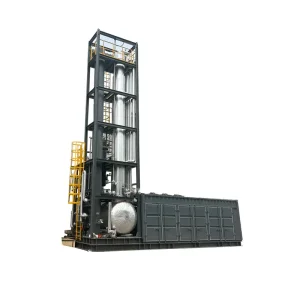
Well Gas Liquefaction Project Case

5. Sourcing Guide: Evaluating Chinese Suppliers for Industrial Shells

Global procurement departments and EPC engineers should consider several factors when sourcing custom furnace shells or pressure vessels from Chinese suppliers:

  • Design and Fabrication Credentials: Ensure the manufacturer holds recognized standard licenses like A2 (China), ASME U/U2 stamp, or CE/PED approvals for European markets.
  • Material Traceability: Verify that raw material plates come from tier-1 steel mills and include mill test certificates (MTCs) to ensure chemistry and mechanical properties align with ASTM or EN standards.
  • Nondestructive Testing (NDT): Check that critical joints undergo rigorous testing, including Radiographic Testing (RT), Ultrasonic Testing (UT), and Magnetic Particle Testing (MT), with certified level II/III technicians.
  • Logistics and Assembly Capabilities: Confirm the supplier's capacity to deliver pre-fabricated shell segments or modular, skid-mounted systems that help reduce field assembly time and costs.
Technical Spec Sheet

Design Standards & Codes

  • Pressure Vessel Codes: ASME Sec VIII Div 1/2, GB-150, EN13445
  • Welding Certification: AWS D1.1, ASME Sec IX, ISO 9606
  • Non-Destructive Testing: UT, RT, MPI, LPI (ISO 9712 / ASNT)
  • Shell Material Grades: Q345R, ASTM A516 Gr.70, SS304, SS316L, Duplex
  • Structural Modeling: ANSYS, PV Elite, SolidWorks FEA
Quality Commitment

Why Sourcing from Hongke Qingneng Matters

As a Sinopec and PetroChina approved supplier, our work adheres to strict safety, health, and environmental standards. We combine advanced academic insights with heavy-duty manufacturing to build reliable equipment for global industry.

Industry Cases

Global Project Footprint

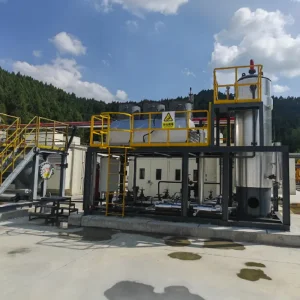
  • Natural Gas Field Purification: Skid-mounted CO2/H2S removal modules.
  • Chemical Off-Gas Recovery: RTO furnace shells utilizing advanced refractory anchoring.
  • Medical & Lab Waste Autoclaves: Centralized heavy-steam sterilizers for bio-hazardous treatment.

Advanced Structural Engineering Features

Optimized configurations engineered for extreme thermal cycles and chemical processes.

Finite Element Analysis

We perform mechanical and thermal stress simulations using finite element analysis (FEA) to locate hot spots, check structural buckling, and optimize refractory thickness before fabrication begins.

Certified Welding Excellence

Welding procedures (WPS) and procedure qualification records (PQR) are qualified under ASME Section IX and ISO standards, ensuring solid joints that resist operating pressure and high temperatures.

Corrosion & Acid Mitigation

We utilize specialized alloy-cladding, high-nickel thermal barriers, and custom refractory anchor designs to prevent corrosion under insulation (CUI) and chemical degradation of structural steel.

Frequently Asked Questions

Common inquiries from EPC contractors, industrial plant engineers, and global procurement departments.

What design codes are followed for international projects?
We fabricate equipment according to international design standards. For pressure vessels, we follow ASME Section VIII (Div 1 & 2) and EN 13445. For structural furnace shells and chemical plants, designs are developed under GB 150, GB 50017, and matching ASTM/EN standards.
How does Hongke Qingneng verify structural integrity?
We use finite element analysis (FEA) to simulate thermal gradients and mechanical stress. Welds undergo comprehensive nondestructive testing (NDT), including ultrasonic, radiographic, and magnetic particle examinations. Hydraulic pressure tests are performed in our shop prior to shipment.
What certifications does the factory hold?
Our facility is certified under GB/T19001-2016 / ISO 9001 Quality Management System, Sinopec HSSE, and China Petroleum Safety and Environment Management Systems. We hold an official A2 level pressure vessel manufacturing license and a pressure pipeline component manufacturing license.
Are modular, skid-mounted systems available?
Yes. We specialize in skid-mounted systems for gas treatment, LNG liquefaction, desulphurisation, and environmental processing. The equipment is assembled, piped, and pre-wired in our facility, helping to reduce on-site installation work.