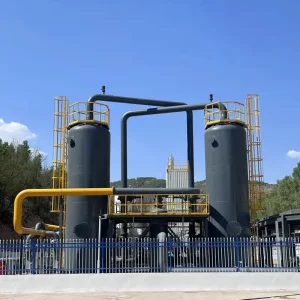
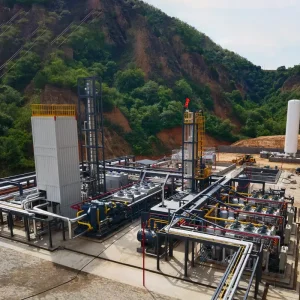
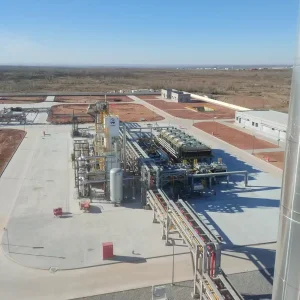
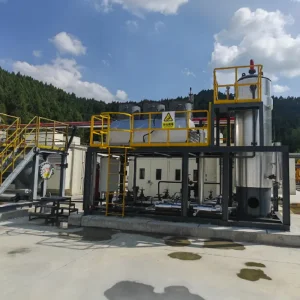
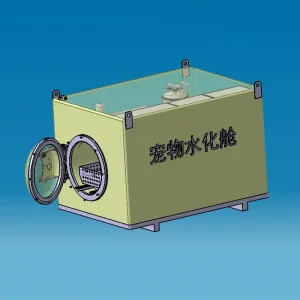
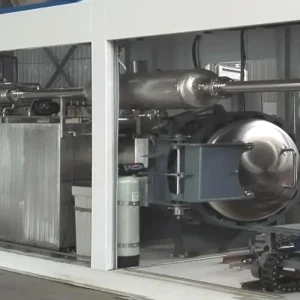
Explore our industrial skid-mounted plants, desulphurisation structures, and state-of-the-art waste disposal units engineered to global safety specifications.
Analyzing gas-phase kinetics, residence time distributions, and the mechanical integrity of modern industrial reactors.
A Jet Stirred Reactor (JSR) operates as a continuous stirred-tank reactor (CSTR) designed specifically for gas-phase kinetic studies, pyrolysis research, and high-temperature oxidation modeling. Unlike mechanical stirred reactors, a JSR achieves homogeneous mixing through the high-velocity sonic injection of reactant gases through multiple micro-nozzles. This design ensures that the mixing time is orders of magnitude shorter than the chemical induction or residence time, satisfying the mathematical assumptions of a perfectly stirred system.
Operating a Jet Stirred Reactor at temperatures exceeding 1000 K requires specialized materials science. Conventional stainless steels experience rapid creep deformation and accelerated oxidation in these environments. To address these demands, our engineering department designs and manufactures JSR vessels utilizing high-nickel alloys such as Hastelloy C-276, Inconel 600, and high-purity fused quartz for laboratory-scale optical diagnostics.
Our JSR systems feature integrated preheaters that heat incoming gases to near-reaction temperatures before they enter the reaction zone. This design reduces thermal gradients and prevents cold-spot quenching, ensuring reliable kinetic data for global combustion modeling, hydrocarbon reforming, and desulfurization reactions.
Procuring advanced chemical reactors internationally requires strict compliance with regional safety frameworks. At Hebei Hongke Qingneng Environmental Protection Equipment Co., Ltd., we address these requirements through comprehensive certifications and engineering standards:
Leveraging high-end manufacturing clusters and strategic partnerships to deliver cost-effective, high-precision equipment.
Our engineering team includes graduates and researchers from Tsinghua University and the Institute of Physics and Chemistry Technology, Chinese Academy of Sciences (CAS), allowing us to integrate advanced thermodynamics and flow dynamics into all JSR and environmental systems.
Located in the Langfang Economic Development Zone, we benefit from a robust industrial manufacturing base. This location provides direct access to high-performance raw materials, specialized surface treatments, and efficient logistics, reducing delivery lead times for global projects.
We test every reactor system at design pressure and temperature, verifying jet fluid patterns using non-destructive testing (NDT), helium leak detection, and thermal imaging cameras before shipment.
Our R&D is led by industry authorities in thermodynamics, cryogenic separation, and chemical process engineering.
Dr. Sun obtained his doctorate from the Institute of Physics and Chemistry Technology, Chinese Academy of Sciences (CAS). As a national senior engineer, he has presided over the National 863 Program, major Natural Science Foundation projects, and specialized aerospace research. Awarded the Special Prize of Technological Invention by the Chinese Society of Refrigeration (2015) and the First Prize of the Beijing Science and Technology Award (2016), he directs our core reactor engineering initiatives.
A Ph.D. candidate and senior engineer at the CAS Institute of Physics and Chemistry Technology, Mr. Zou oversees the company’s technical execution and operations. He has managed several major science and technology special projects under the "12th Five-Year Plan" and published 24 peer-reviewed academic papers (including 11 SCI/EI articles). He holds 5 national patents and won the Silver Medal at the 19th China International Industry Expo.
Dr. Cheng earned his Doctor of Engineering from the CAS Institute of Physics and Chemistry Technology. A specialist in multi-component phase change heat transfer, fluid flow behavior, and reactor thermal modeling, he leads the process design for our skid-mounted gas treatment systems and custom non-standard pressure vessels.
Our reactor systems and skid-mounted processing units are designed for integration across several industrial applications:
JSRs are utilized to study chemical kinetic pathways. Researchers use them to analyze the oxidation mechanisms of biofuels, synthetic fuels, and traditional hydrocarbons, generating validation datasets for chemical kinetic modeling software like Chemkin.
For chemical and natural gas facilities, our high-quality desulphurisation equipment removes H2S and organic sulfur compounds, protecting downstream components and meeting strict environmental emission requirements.
We manufacture vehicle-mounted and skid-mounted LNG purification and liquefaction plants, allowing operators to capture and liquefy associated gas, coalbed methane, and shale gas in remote fields.
Modern chemical processing is shifting toward modular, skid-mounted installations to reduce field construction costs and minimize onsite environmental footprints. Additionally, JSR principles are increasingly being adapted for industrial waste treatment, such as high-temperature VOC recovery and medical waste neutralization, utilizing thermal energy and rapid mixing to maximize processing efficiency.
Find answers to common questions about JSR configurations, procurement, and operations.
We optimize reactor mixing using computational fluid dynamics (CFD) simulations to determine the positioning of the multi-nozzle injectors. We then verify these models using gas tracer injection tests, confirming that the mixing time is shorter than the reaction induction time to maintain spatial homogeneity.
For acidic, halogenated, or high-temperature sulfur-bearing gases, we manufacture reactors and internal components from Hastelloy C-276, Inconel 625, or high-purity quartz. These materials provide high resistance to chemical corrosion and thermal stress cracking.
Yes. As an authorized A2-level pressure vessel manufacturer, we design and build systems in compliance with ASME Section VIII, CE-PED, and Chinese GB standards. We provide complete material test reports (MTRs), weld qualification documentation, and pressure test certificates upon delivery.
Typical lead times range from 12 to 24 weeks, depending on system complexity, material requirements, and engineering validation needs. Our Langfang facility manages all design, machining, welding, assembly, and testing processes internally, helping to maintain project schedules.
We equip our JSR systems with mass flow controllers (MFCs), multi-point thermocouples, high-precision pressure transducers, and an integrated PLC control system. We also design optional optical ports for laser-based gas analysis and inline gas chromatography interfaces.
Explore our extended lineup of skid-mounted purification, liquefaction, and environmentally sound waste treatment systems.
 Hongke Qingneng