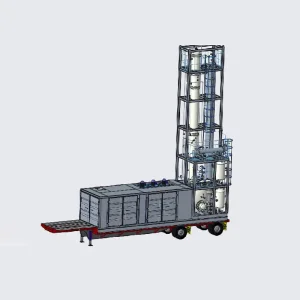
Discover our premier collection of skid-mounted environmental, gas purification, and high-efficiency liquefaction processing systems.
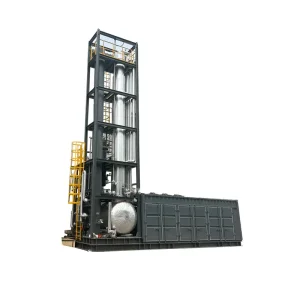
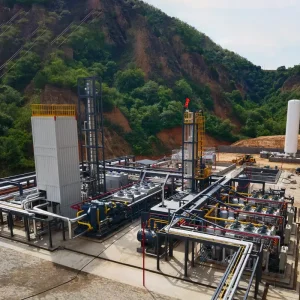
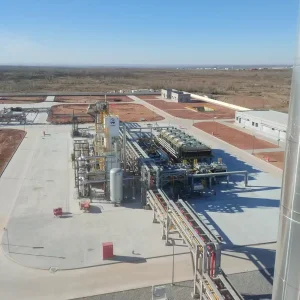
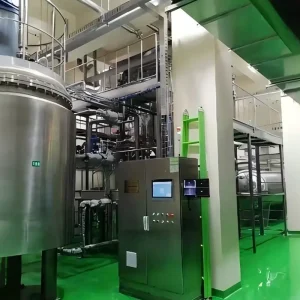
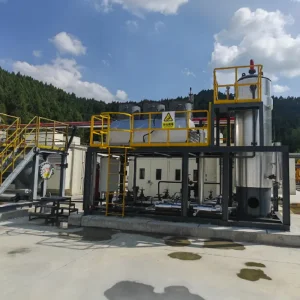
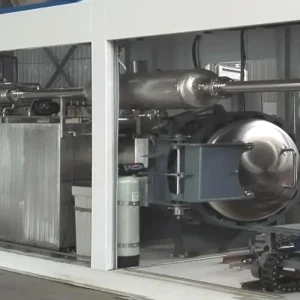
In modern heavy industry, chemical processing, cryogenic operations, and environmental infrastructure, thermal management acts as the primary governor of efficiency, safety, and sustainability. The shell and tube condenser remains the workhorse of industrial heat exchange systems. Globally, the demand for highly efficient heat recovery and condensing units has escalated, driven by stringent carbon emission constraints and the expansion of natural gas, hydrogen, and cryogenic fluid distribution networks.
Across key markets—ranging from the petrochemical refineries of the Gulf Coast to the massive LNG liquefaction hubs in Australia, Qatar, and North America—shell and tube condensers are required to handle extreme pressures, high thermal cycles, and highly corrosive agents. As global suppliers shift toward high-precision fabrication, Chinese manufacturers have emerged at the forefront, bridging the gap between custom thermodynamic engineering and large-scale, cost-effective fabrication under stringent codes like ASME Section VIII Division 1 & 2, TEMA (Tubular Exchanger Manufacturers Association), and China's GB150 standards.
Today's industrial plants demand heat exchangers that not only manage massive thermal transfer rates but also integrate seamlessly into modular, skid-mounted units. As a result, structural compactness, corrosion mitigation, and high thermal efficiency are non-negotiable parameters for engineering procurement managers.
The shell and tube heat exchanger market is transitioning away from standard, off-the-shelf configurations toward custom-engineered, multi-phase systems designed for specific process streams. Several trends are defining the future of this industry:
| Parameter / Target | Standard Exchangers | Advanced Shell & Tube Condensers | Primary Industrial Benefits |
|---|---|---|---|
| Heat Transfer Coefficient | Baseline (100%) | 140% - 180% Enhancement | Reduces surface area requirements; compact footprint. |
| Corrosion Allowance | 1.5mm - 3.0mm (Carbon Steel) | Optimal Metallurgy + Low Profile Cladding | Prolongs lifecycle in acidic (H₂S, VOC) environments. |
| Vibration Suppression | Standard Baffling | Helical / Rod Baffling Designs | Eliminates tube failure due to fluid-induced vibration. |
| Thermal Range | -20°C to 250°C | -180°C to 450°C (Cryogenic to High Temp) | Essential for MRC (Mixed Refrigerant) & BOG recovery. |
The design of a shell and tube condenser differs significantly from single-phase liquid-to-liquid heat exchangers. Vapor condensation involves a phase change that is highly sensitive to pressure drop, vapor velocity, and the presence of non-condensable gases.
Engineers must decide between condensation on the shell side or the tube side. Shell-side condensation is typically preferred for large vapor volumes because it offers a lower pressure drop and allows for complex baffle configurations (such as double-segmental or helical baffles) to maintain high cross-flow velocities. Conversely, tube-side condensation is selected for high-pressure vapors or when corrosive condensates must be isolated within specialized alloy tubes.
Even minute concentrations of non-condensable gases (such as nitrogen, carbon dioxide, or methane in refrigeration loops) can accumulate on the heat transfer surfaces, forming a stagnant gas barrier. This barrier increases thermal resistance and can reduce the overall heat transfer coefficient by up to 80%. Advanced shell and tube designs incorporate venting ports positioned in low-velocity zones of the shell, ensuring that non-condensables are continuously swept away from the condensation surfaces.
Equipped with state-of-the-art manufacturing facilities certified for A2 Level Pressure Vessel fabrication and GB/T19001-2016 quality management frameworks, Hebei Hongke Qingneng guarantees extreme safety standards for high-pressure operations.
Led by PhDs and Senior Engineers from Tsinghua University and the Institute of Physics and Chemistry Technology, Chinese Academy of Sciences (CAS), our design methodologies are backed by deep thermodynamic research.
From initial thermal profiling via HTRI software to fabrication, testing, site integration, and maintenance of skid assemblies, we provide comprehensive turnkey support for industrial refrigeration and gas treatment fields.
Hebei Hongke Qingneng Environmental Protection Equipment Co., Ltd. (established in June 2021 with a registered capital of 78 million yuan) operates from its high-precision manufacturing base in the Sanhe Economic Development Zone, Langfang City. The core differentiator of Hebei Hongke Qingneng is its academic pedigree. Our engineering and technological innovations are led by some of China’s most prominent thermodynamic minds:
PhD, Institute of Physics and Chemistry Technology, CAS. National Senior Engineer.
Dr. Sun has presided over the National 863 Program, aerospace/military initiatives, and key Natural Science Foundation programs. He has been recognized with the First Prize of Science and Technology of the China Coal Industry, the Special Prize of Technological Invention of the Chinese Society of Refrigeration, and the First Prize of the Beijing Science and Technology Award. He holds over 20 independent R&D patents, driving the development of skid-mounted liquefaction solutions.
PhD Candidate, Senior Engineer at CAS.
Zou Xin manages the strategic market direction and operations of the firm. With a research record including 24 domestic and international academic papers (11 indexed by SCI/EI), 5 national invention patents, and the Special Award of the 7th China Refrigeration Society Technological Invention Award, he brings deep academic rigour to real-world industrial systems.
Doctor of Engineering, CAS.
A specialist in the thermodynamic phase change characteristics of mixed refrigerants, Dr. Cheng spearheaded the "Technology Development and Application of Skid-mounted Natural Gas Liquefaction Units with Series Specifications". His research has earned him the Special Prize of the Chinese Refrigeration Society and the First Prize of the Beijing Science and Technology Award.
Our facility is fully licensed for A2 level pressure vessel fabrication, pressure pipeline components manufacturing, and has secured Sinopec HSSE / China Petroleum HSE management systems certifications. This makes Hongke Qingneng a qualified, high-tier supplier for the global oil, gas, and chemical sectors.
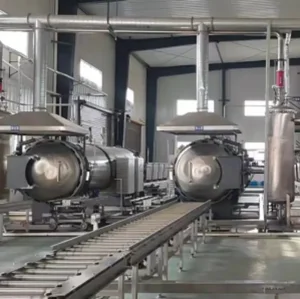
In addition to manufacturing shell and tube condensers, Hongke Qingneng designs and fabricates a wide range of pressure vessels, medical waste steam treatment systems, animal tissue hydrolysis reactors, biological wastewater treatment systems, and skid-mounted process units. These systems are used in natural gas purification, VOC mitigation, industrial refrigeration down to -180℃, and helium extraction from BOG (Boil-Off Gas).
By combining our academic background with industrial manufacturing capabilities, we help plant operators solve complex challenges related to heat integration, system compactness, and operational reliability.
How our custom-designed shell and tube condensers and pressure vessels power critical global industries.
In skid-mounted natural gas liquefaction plants, our shell and tube condensers act as the primary thermal sink for mixed refrigerant cycles (MRC). They must handle high pressure differentials while preventing thermal fatigue caused by cryogenic shock. Our design ensures zero leakage and maximum heat transfer density in small spaces.
For chemical tail gas treatments, volatile organic compounds must be condensed out of air streams at low temperatures. Hongke Qingneng's condensation units prevent environmental emissions while recovering valuable solvents. They are designed to withstand corrosion from chlorinated hydrocarbons and acidic vapors.
In centralized medical waste high-temperature steam systems and animal carcass hydrolysis plants, steam management is critical. Our heavy-duty condensers quickly collapse exhaust steam, preventing odor escape, reducing chamber pressure, and recovering heat energy to preheat boiler feed water.
Hongke Qingneng successfully delivered a compact, skid-mounted natural gas liquefaction unit using our proprietary shell and tube condenser design. Utilizing a mixed refrigerant cycle, the system maintained stable operation under high ambient temperatures. It achieved a 20% reduction in power consumption compared to conventional cooling designs, demonstrating the real-world value of our thermal engineering.
Expert engineering responses to common queries regarding shell & tube condenser design, maintenance, and specification.
Explore our specialized desulphurisation, high-temperature waste steam processing, and tail gas recovery systems.
 Hongke Qingneng