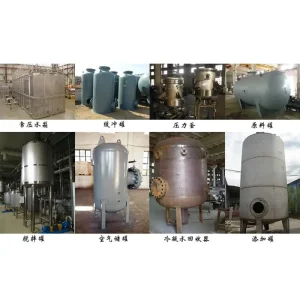
In modern chemical processing, pharmaceutical synthesis, and eco-centric resource recovery, the stirred reactor represents the core engine of mass transfer and thermal kinetics. Modern process requirements demand high thermal efficiency, precise containment of volatile gases, and robust resistance to corrosive chemical substances.
As leading wholesale stirred reactor suppliers and factories in China, we leverage advanced thermodynamic models from the Chinese Academy of Sciences and Tsinghua University to produce heavy-duty autoclaves, reactors, and non-standard pressure vessels that meet strict global engineering benchmarks. From gas-liquid dispersion to highly exothermic polymerization reactions, our custom units are engineered to operate continuously under extreme pressure and thermal stress.
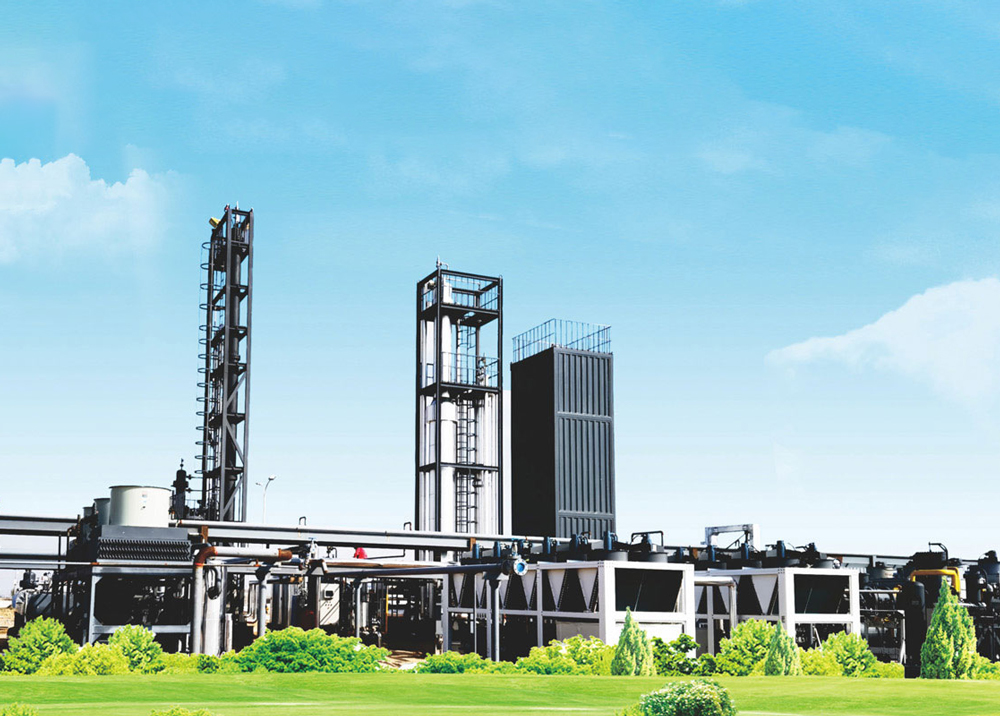
As global industries pivot toward decarbonization and energy transition, the demand for sophisticated chemical containment systems is skyrocketing. Procurement managers are no longer looking for simple storage structures; they require highly integrated, smart processing equipment. Here are the major trends impacting procurement strategies worldwide:
Standard carbon steel is rapidly giving way to specialized materials such as Hastelloy C276, Titanium cladding, zirconium, and 316L Stainless Steel. These materials prevent chemical erosion and eliminate risk pathways in harsh acidic or basic operations.
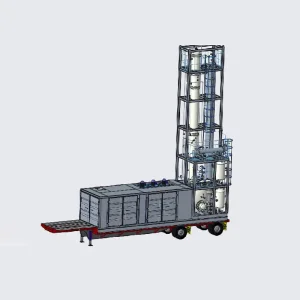
Heavy industry is abandoning slow, site-built reactor integrations in favor of plug-and-play skid-mounted units. These pre-piped, pre-wired configurations minimize field execution errors and drastically reduce local installation overhead.
For high-viscosity media and multi-phase gas-liquid mixing, state-of-the-art designs employ double helical ribbons, anchor impellers, or high-shear gas-inducing turbines to ensure optimal mass transfer and uniform temperature distribution.
Hebei Hongke Qingneng Environmental Protection Equipment Co., Ltd. custom designs pressure vessels, agitated autoclaves, and desulfurization equipment to match challenging operation matrices. Below is a breakdown of our foundational engineering capabilities.
| Vessel Parameter / Component | Standard Wholesale Configuration | Advanced Custom & Heavy-Duty Options | Typical Applications |
|---|---|---|---|
| Operating Pressure Range | Full Vacuum up to 10 MPa (100 Bar) | Ultra-High Pressure Systems up to 35 MPa | Polymerization, Hydrogenation, Gas Recovery |
| Operating Temperature | -40°C to 250°C | Cryogenic (-196°C) to High Temp (650°C) | LNG Purification, Heavy Hydration, Pyrolysis |
| Materials of Construction | 304 / 316L Stainless Steel | Hastelloy C276, Monel, Inconel, Titanium Clad | Acidic gas desulphurisation, toxic waste disposal |
| Sealing Mechanisms | Single/Double Mechanical Seals | Zero-leakage Magnetic Coupling Drive | Lethal services, highly toxic/volatile chemistry |
| Heating / Cooling Method | Half-pipe jacket or internal cooling coil | Electric resistance heating & cooling dimple jackets | Highly exothermic organic syntheses |
Our competitive advantage lies in our scientific foundation. Backed by elite researchers from Tsinghua University and the Institute of Physics and Chemistry Technology, Chinese Academy of Sciences (CAS), we integrate deep academic insight with scalable manufacturing processes.
Operating a high-pressure reactor requires certified structural integrity. A single manufacturing defect can lead to catastropic failures. Hebei Hongke Qingneng adheres to international standards to verify safety at every stage:
We are officially licensed by Chinese authorities to manufacture Class III (A2) pressure vessels, ensuring that our welding, plate bending, and non-destructive testing (NDT) meet strict pressure-bearing requirements.
Certified with China Petroleum Health, Safety and Environment Management System credentials, demonstrating compliance with international petrochemical safety thresholds.
Our ISO-aligned quality systems trace every plate of raw steel from mill run test reports (MTR) to final hydraulic pressure testing, guaranteeing complete manufacturing traceability.
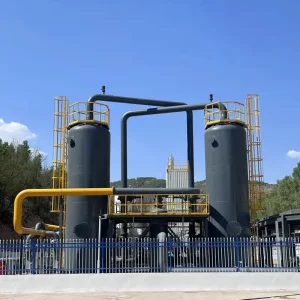
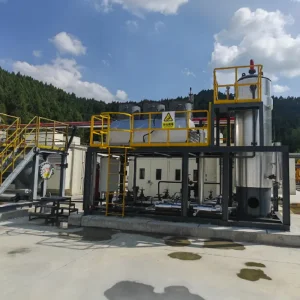
Beyond isolated stirred reactors, our engineering team designs and manufactures complete process skids to solve complex environmental and energy challenges, from waste management to gas processing.
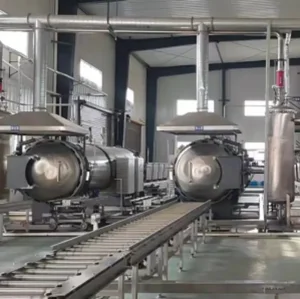
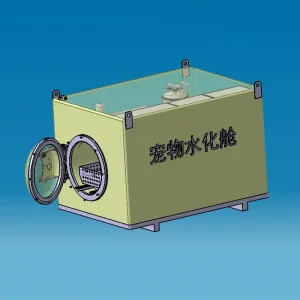
Our high-temperature steam treatment systems process medical waste efficiently. We provide both high-capacity centralized installations and mobile skid-mounted units for field operations, utilizing steam autoclave mechanics to neutralize pathogens reliably.
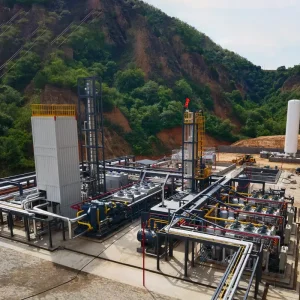
We deploy small-to-medium skid-mounted LNG systems designed to recover flare gas, coalbed methane, and shale gas in remote fields. These units feature integrated purification blocks that remove acid gases (desulphurisation) and heavy hydrocarbons prior to cryo-liquefaction.
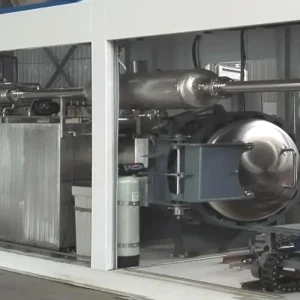
Operating down to -180°C, our custom refrigeration plants support process condensers, vacuum systems, freeze dryers, and low-temperature volatile organic compound (VOC) recovery systems.
As chemical synthesis transitions toward continuous processing and AI-driven automation, our R&D team is developing next-generation stirred reactor technologies to keep our clients competitive:
Integrating real-time sensor arrays directly into the shaft and reactor core to measure heat flux, viscosity, and chemical concentration. This data is fed into a digital twin dashboard to optimize yield and predict maintenance needs.
Standardizing magnetic coupling drives across all high-pressure gas-liquid reaction processes to eliminate volatile emissions, protecting both operators and the environment.
Combining our proprietary -180°C industrial refrigeration expertise with reactor jackets to facilitate low-temperature organometallic syntheses at commercial scales.
Depending on vessel complexity, capacity, and material selection (e.g., standard stainless steel vs. Hastelloy cladding), lead times range from 8 to 16 weeks. Non-standard pressure vessels requiring ASME or custom engineering calculations may take longer to complete rigorous QA/QC checks.
Yes. While we carry the official Chinese A2 Pressure Vessel manufacturing license, our engineering team regularly designs, calculates, and fabricates reactor systems in compliance with ASME Section VIII and European PED standards to meet local regulatory codes for export.
A magnetic coupling drive is a hermetically sealed, glandless system that uses external magnets to rotate an internal shaft assembly. Traditional mechanical seals can wear over time, creating potential leak paths. Magnetic drives eliminate dynamic seals entirely, preventing leaks when handling toxic, carcinogenic, or high-pressure flammable gases.
We conduct a comprehensive suite of quality tests, including non-destructive testing (radiographic and ultrasonic inspection of welds), hydrostatic pressure testing at 1.25x to 1.5x design pressure, pneumatic tests, helium leak checks, dynamic balancing of agitator shafts, and operational runs of electrical and thermal skids.
Partner with a design and manufacturing team backed by members of the Chinese Academy of Sciences and Tsinghua University. We deliver durable, high-performance pressure vessels, process skids, and custom agitated stirred reactors.
Contact Our Technical Sales Team Hongke Qingneng