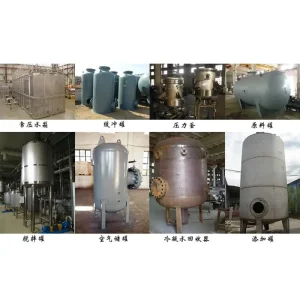
Unlike carbon steels which experience ductile-to-brittle transitions at low temperatures, aluminum alloys display increased tensile strength and fracture toughness as temperature falls to cryogenic levels (-196°C to -269°C). This makes them perfect for LNG and liquid helium systems.
Aluminum vessels reduce overall dry weight by up to 50% compared to traditional steel vessels. This weight reduction directly translates to lower freight costs, simplified foundation construction, and lower carbon footprints during skid transportation and setup.
High-purity industrial processes, such as BOG (Boil-Off Gas) helium extraction, require internal surfaces that minimize gas outgassing. High-grade aluminum alloys prevent contamination, preserving the integrity of expensive noble gas streams.
Holding a Doctorate from the Institute of Physics and Chemistry Technology, CAS, Dr. Sun has led several national strategic programs, including the prestigious National 863 Program. With a portfolio of over 20 proprietary R&D patents, Dr. Sun's pioneering research on cryogenics has been awarded the First Prize of the Beijing Science and Technology Award (2016) and the Special Prize of Technological Invention of the Chinese Society of Refrigeration (2015).
Heading the market, operations, and execution protocols, Zou Xin has managed high-level scientific initiatives including the "12th Five-Year Plan" national major projects. An author of 24 international and domestic academic papers (with 11 indexed in SCI/EI), he holds 5 national invention patents. His work earned the Silver Medal at the 19th China International Industry Expo in 2017.
A specialist in fluid thermal dynamics and mixed working media phase change heat transfer, Dr. Cheng has guided the structural design of our skid-mounted LNG units and pressure systems. His academic achievements were recognized with the Special Prize of Science and Technology from the Chinese Refrigeration Society, and he oversees the design and testing of all custom vessels.
Our facility holds the National A2 Level Pressure Vessel Manufacturing License and the Pressure Pipeline Component Manufacturing License. We operate under GB/T19001-2016 quality management systems and are certified to Sinopec HSSE and CNPC Health, Safety & Environment standards.
Every custom aluminum pressure vessel undergoes systematic quality testing. This includes digital radiographic testing (RT), ultrasonic testing (UT), magnetic particle inspection (MT), and helium mass spectrometer leak detection down to 1x10⁻¹⁰ Pa·m³/s.
Recognized as an official Langfang municipal R&D platform, our strategic location in the Sanhe Economic Development Zone enables rapid logistics, strong material sourcing, and efficient integration of custom projects.
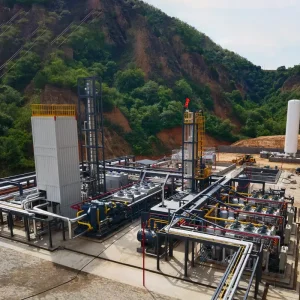
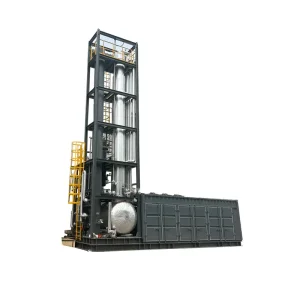
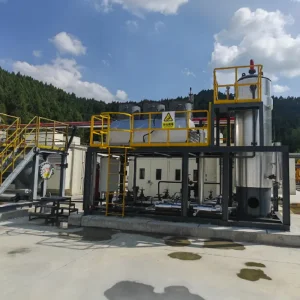
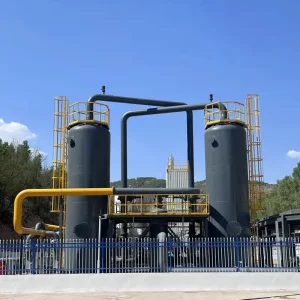
Our skid-mounted purification systems manage deacidification, dehydration, and heavy hydrocarbon removal. Using optimized aluminum heat exchangers, these units achieve high liquefaction efficiency in shale gas fields.
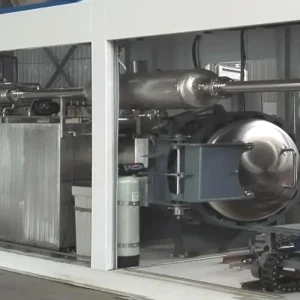
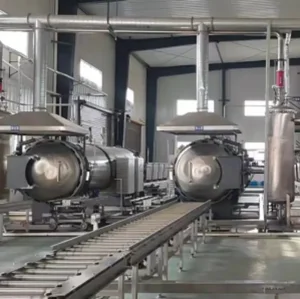
Engineered for bio-safety compliance, our centralized and mobile high-temperature steam treatment systems process medical waste. The primary autoclave chambers are designed for durability under cyclic temperature swings.
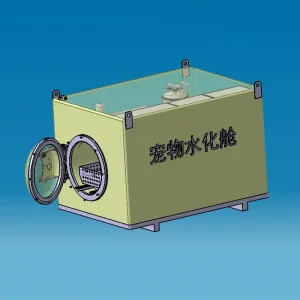
We build high-temperature hydrolysis equipment for laboratory animal carcass disposal. The vessels manage complete biological breakdown and pathogen elimination, meeting high environmental standards.
Aluminum alloys (like 5083-O) do not undergo a ductile-to-brittle transition, so they retain their ductility and toughness down to liquid nitrogen (-196°C) and liquid helium (-269°C) levels. They also offer a high strength-to-weight ratio and high thermal conductivity, which reduces cool-down times and thermal stresses in cryogenic heat exchangers.
Our products are built in compliance with China's GB150 national standards, supported by our A2 class Pressure Vessel Manufacturing License. For international projects, we configure our manufacturing procedures to align with ASME Section VIII Division 1 guidelines and European PED requirements.
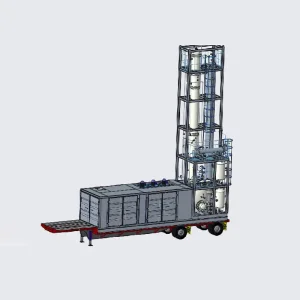
By integrating pressure vessels, piping, instrumentation, and control systems onto a single structural skid frame at our facility, we reduce on-site assembly work. This modular setup minimizes installation errors, bypasses weather-related construction delays, and accelerates commissioning at the target site.
We use a multi-step verification protocol. First, we perform weld inspection via digital radiographic or ultrasonic methods. Second, we complete hydrostatic or pneumatic proof tests at 1.25 to 1.5 times the design pressure. Finally, for high-purity or helium applications, we perform helium leak detection to confirm joint integrity.
 Hongke Qingneng