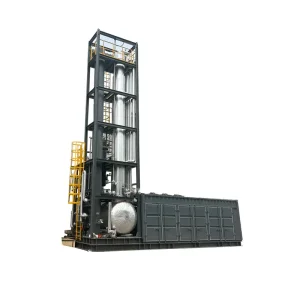
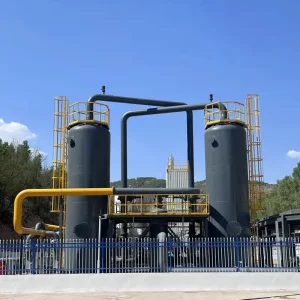
In modern industrial processing, the design, integrity, and operational safety of high-pressure containers are critical parameters that define project success. As global demands for clean energy transitions, bio-safety controls, and environmental recovery intensify, the requirement for custom, high-durability pressure vessels has shifted from basic structural compliance to advanced thermodynamic engineering.
This technical whitepaper examines the integration of specialized chemical processes within high-pressure systems, focusing on the equipment engineered by Hebei Hongke Qingneng Environmental Protection Equipment Co., Ltd. Established in June 2021 with a registered capital of 78 million Yuan, our manufacturing facility is located in the Sanhe Economic Development Zone, Langfang City. We are an R&D-led manufacturing enterprise dedicated to high-temperature steam medical waste treatment systems, animal carcass hydrolysis plants, bio-wastewater sterilization configurations, and complete skid-mounted packages for natural gas/coalbed methane (CBM) liquefaction, VOC control, and chemical tail-gas helium extraction.
Unlike conventional metal fabrication shops, Hongke Qingneng is grounded in advanced cryogenic and thermodynamic science. Our core technical framework is developed in close cooperation with top-tier research institutes, including Tsinghua University and the Institute of Physics and Chemistry Technology, Chinese Academy of Sciences (CAS). This academic integration allows us to tackle complex challenges in phase change heat transfer, multi-component mixed refrigerant systems, and ultra-low temperature processing.
An alumnus of the Institute of Physics and Chemistry Technology (CAS) and a national senior engineer. Dr. Sun has led various national 863 Program initiatives, natural science foundation projects, and aerospace-grade refrigeration system developments. Under his leadership, the company has deployed over 20 proprietary technologies in large-scale energy projects.
Ph.D. candidate and senior engineer from the CAS Institute of Physics and Chemistry Technology. Author of 24 international and domestic academic papers (11 indexed in SCI/EI). Holds 5 national patents and led the market commercialization of our skid-mounted LNG equipment portfolio.
Ph.D. in Engineering from CAS. Recognized for his research in the "Technology Development and Application of Skid-mounted Natural Gas Liquefaction Units". Specialist in mixed refrigerant processes and the fluid dynamics of high-pressure multi-phase flows.
This technical core has led to major breakthroughs in the field of heavy hydrocarbon removal, acid gas absorption, and deep cryogenic liquefaction, securing the company the prestigious first prize of the Beijing Science and Technology Award and the Special Prize of the Technological Invention Award of the Chinese Society of Refrigeration.
Sourcing pressure vessels and integrated skid-mounted process equipment from China offers distinct supply chain advantages that combine cost efficiency with advanced manufacturing capabilities:
Our factory operates under the A2 class pressure vessel manufacturing license, which authorizes us to fabricate medium-to-high pressure vessels. We also hold ISO 9001:2016 quality management certifications, Sinopec HSSE, and CNPC HSE health and safety management approvals, ensuring compliance with strict petroleum and petrochemical industry standards.
For international procurement managers, navigating the differences between regional engineering standards is a common hurdle. High-pressure container design relies on calculations for minimum wall thickness, maximum allowable working pressure (MAWP), fatigue limits, and wind/seismic loading.
At Hongke Qingneng, we bridge these regional differences. We design and fabricate custom solutions to align with multiple global codes:
| Design Code | Primary Regions | Key Regulatory Focus | Our Execution Approach |
|---|---|---|---|
| GB150 Series | China / Belt & Road | Material grades, hydraulic test factors, safety accessories certification. | Standard implementation with full A2 class licensing approvals. |
| ASME Sec VIII Div 1 & 2 | Americas, Middle East, Global | Finite Element Analysis (FEA) for non-standard geometry, strict welding procedures. | Detailed calculations using PV Elite software; third-party inspections (SGS, TUV). |
| CE / PED (2014/68/EU) | European Union | Essential safety requirements, material qualification (PMA), CE marking. | Notified Body coordination, material tracking, and EU declaration conformity. |
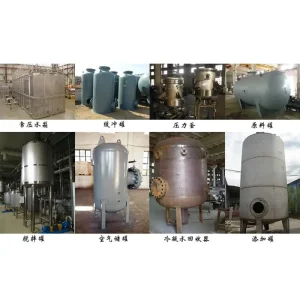
Whether the project demands a heavy-wall autoclave chamber for medical waste sterilization or a low-temperature stainless steel pressure separator for shale gas liquefaction, our engineering division validates stress distributions via 3D modeling and FEA tools. This process prevents localized stress concentrations near main nozzles and support saddles, ensuring safe operation over decades of service.
The operating environment of a pressure vessel determines its material choice and structural features. Our engineering portfolio addresses diverse industrial applications:
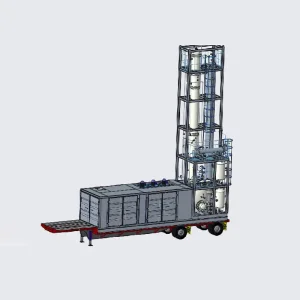
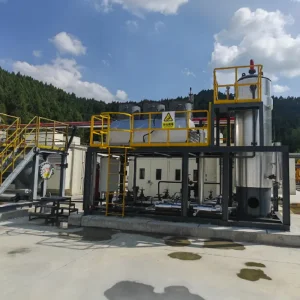
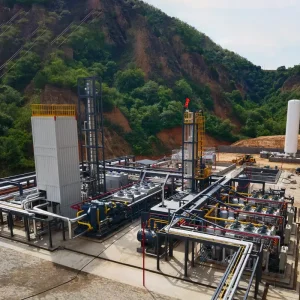
Operating at pressures up to 10 MPa and temperatures as low as -196°C, our skid-mounted liquefaction containers are built from low-temperature alloys. These materials resist impact embrittlement, keeping natural gas, shale gas, or coalbed methane stable throughout the process.
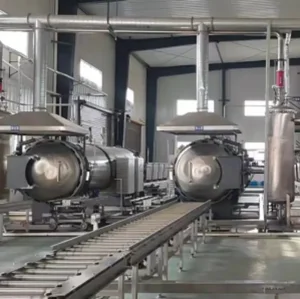
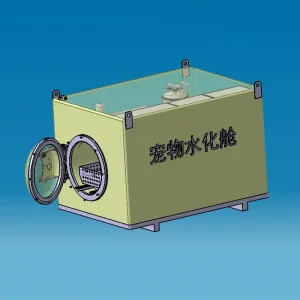
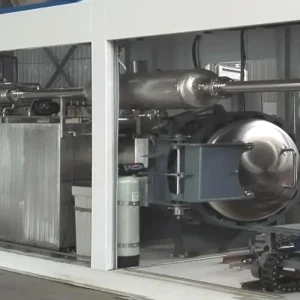
Used in medical waste treatment and animal carcass disposal, these autoclaves operate under cyclical pressure changes and steam environments. We design these vessels with corrosion-resistant SS316L inner liners and quick-opening safety doors to prevent stress fatigue.
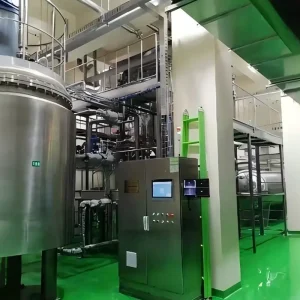
Processing sour natural gas requires corrosion control. Our purification columns feature advanced MDEA deacidification and molecular sieve dehydration internals. We use HIC-resistant steel plates to prevent hydrogen-induced cracking in sour gas environments.
The pressure vessel manufacturing industry is shifting to meet new global demands, guided by carbon reduction and process efficiency:
 Hongke Qingneng