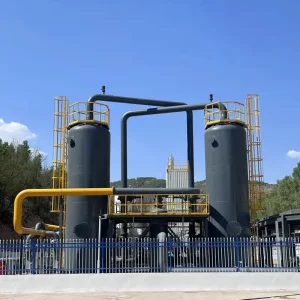
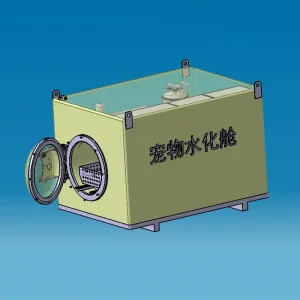
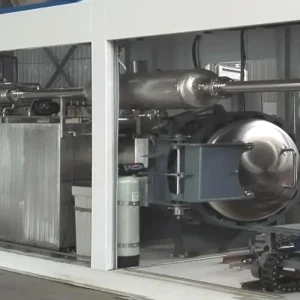
Premium medical waste steam treatment chambers and environmental purification packages configured for municipal and industrial site layouts.
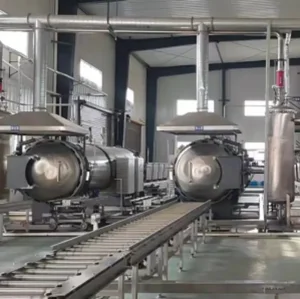
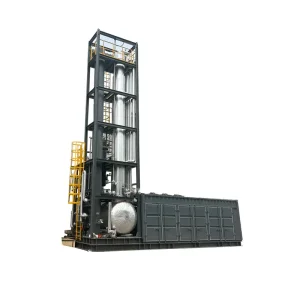
Israel's unique geography, characterized by high population density and delicate groundwater resources in the coastal plain aquifers, imposes exceptionally strict constraints on waste disposal. The Israel Ministry of Environmental Protection (MoEP - המשרד להגנת הסביבה) has consistently tightened rules on landfilling, steering municipal and hazardous waste operators toward thermal neutralization and mechanical processing.
In this environment, hospitals such as Rambam Health Care Campus, Tel Aviv Sourasky Medical Center (Ichilov), and Sheba Medical Center require continuous, dependable disposal channels for biomedical hazards. Centralized high-temperature steam treatment (autoclaving combined with high-performance shredding) has emerged as the definitive benchmark technology. It offers absolute pathogen eradication (achieving a validated Log 6 microbial reduction) without the air quality hazards associated with traditional combustion.
The shift from incineration to autoclave-based steam treatment in Israel is driven by both environmental policy and economic reality. Centralized facilities utilizing our high-temperature steam systems benefit from:
Hebei Hongke Qingneng Environmental Protection Equipment Co., Ltd. builds upon a solid academic foundation. Powered by technology developed in collaboration with researchers from Tsinghua University and the Institute of Physics and Chemistry Technology, Chinese Academy of Sciences (CAS), our equipment incorporates sophisticated phase-change thermodynamics and cryogenic control loops.
Our core team is led by senior engineers and PhDs who have successfully translated national aerospace and defense thermodynamic patents into B2B environmental hardware. By managing the gas-liquid phase behavior under high pressures, our autoclaves maintain uniform temperature profiles (typically 134°C to 150°C under 0.22 to 0.45 MPa) throughout the entire vessel, eliminating the cold spots common in low-tier autoclaves.
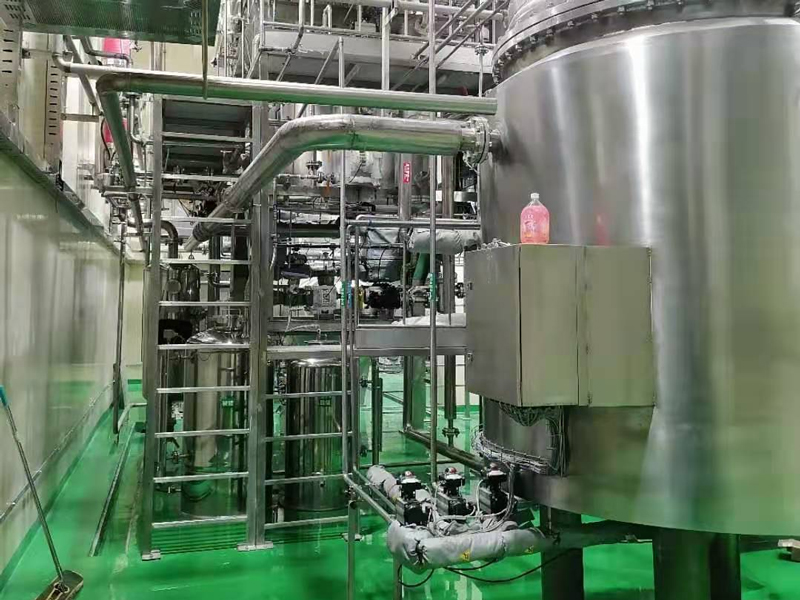
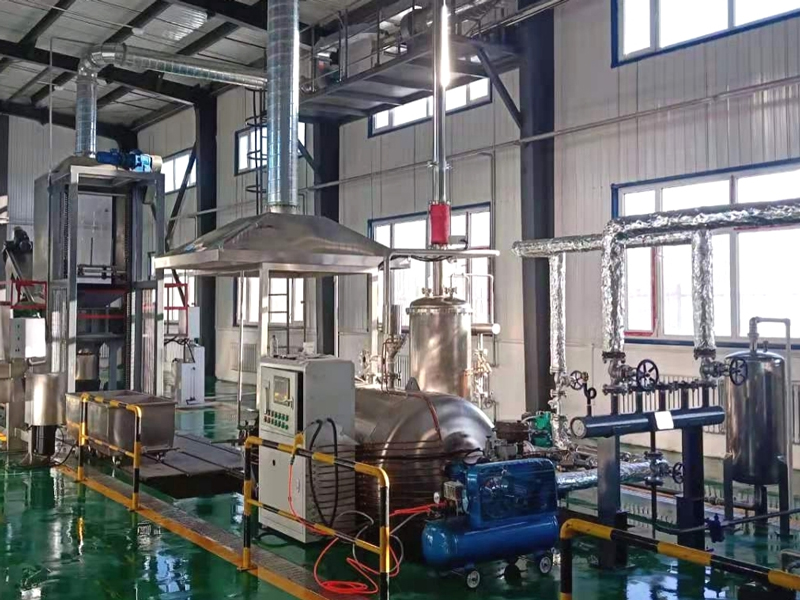
We supply more than single-pressure autoclaves. We deliver fully integrated, turnkey medical waste processing plants:
Deploying pressure equipment in Israel requires adherence to strict safety standards, such as EN 285, ASME Section VIII Division 1, and European Pressure Equipment Directive (PED). Hebei Hongke Qingneng holds an A2-level pressure vessel manufacturing license, alongside ISO 9001, ISO 14001, and Sinopec HSSE management system credentials. This level of quality assurance simplifies the process of obtaining approvals from local Israeli testing agencies, guaranteeing hassle-free installation, testing, and operations.
Combining deep Chinese manufacturing efficiency with state-of-the-art precision thermodynamic designs.
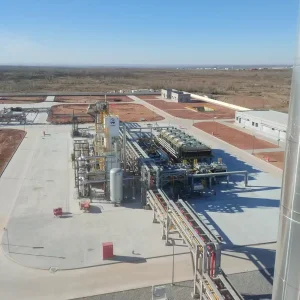
Explore our flagship projects implemented under rigorous quality controls, now optimized for Israel's municipal and clinical projects.
Technical, structural, and regulatory clarifications regarding our centralized autoclaves for Israeli stakeholders.
Our centralized autoclaves are outfitted with advanced vacuum pump systems combined with high-grade HEPA filters and custom deacidification scrubbers. During the pre-vacuum phase, all cold air extracted from the chamber is routed through a secondary thermal sterilization step or a high-efficiency biological filtration system to prevent bio-aerosol release, fully satisfying Israeli regulations.
Yes. The interior chambers of our autoclaves are fabricated from premium corrosion-resistant stainless steel (such as Grade 316L or duplex steel upon request) and certified to A2 manufacturing licenses. This ensures long-term resistance against corrosion from chlorine-based residues and aggressive sanitizing agents.
Our pressure chambers are designed for a service life exceeding 15 to 20 years under continuous, high-throughput commercial operations, assuming recommended preventative maintenance schedules are maintained. The structural engineering is strictly verified using finite element analysis (FEA) for cyclic fatigue resistance.
We provide remote commissioning and on-site guidance. Our engineers can supervise structural installation, system configuration, pressure testing, and validation protocols (IQ/OQ/PQ) using standard spore testing indicators (Geobacillus stearothermophilus) to assure local authorities of full sterilization efficacy.
Heavy-duty skid-mounted systems, purification assemblies, and gas lifecycle plant modules for comprehensive infrastructure development.
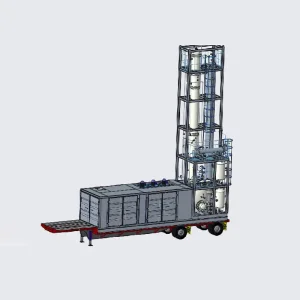
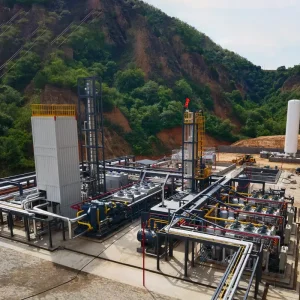
Request a customized proposal, system P&ID schematic drawings, and pressure vessel stress calculation data files compiled by our CAS-backed engineering team.
 Hongke Qingneng