Deploying proven industrial engineering solutions across municipal, energy, and biomedical waste streams globally.
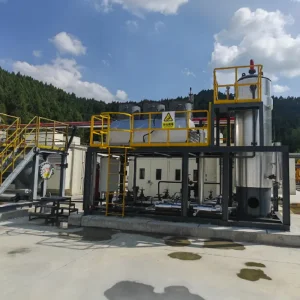
Factory-engineered tail gas solutions designed for high efficiency recovery, reducing gas emissions and industrial losses.
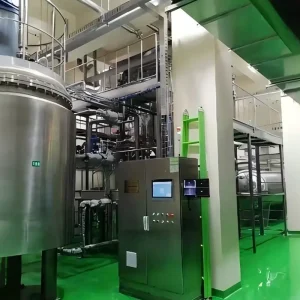
High-temperature tissue hydrolysis systems providing reliable biosecurity and environmental safety profiles.
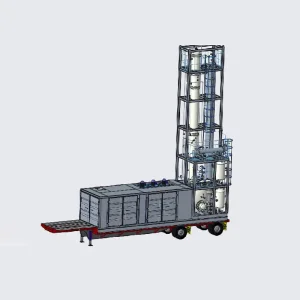
Skid-mounted mobile systems engineered for isolated natural gas fields, maximizing liquefaction yield and flexibility.
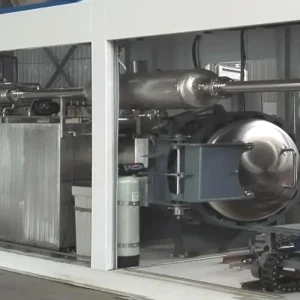
High-temperature steam treatment systems mounted on mobile skids for fast, compliant on-site waste management.
Advanced recovery solutions improving thermal efficiencies and reducing flaring at upstream facilities.
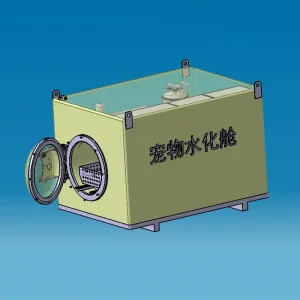
Alkaline hydrolysis chambers designed for gentle, harmless, and carbon-friendly veterinary disposal.
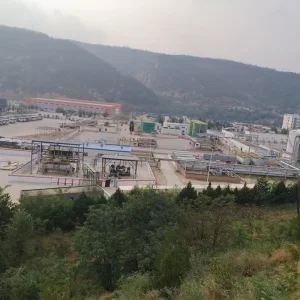
State-of-the-art organic waste gas treatment and recovery plants for rigorous emission compliance.
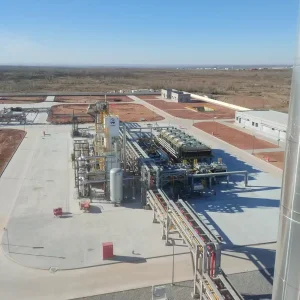
Providing end-to-end support from layout configuration to cold box commissioning and cryogenic maintenance.
As the global energy paradigm shifts away from fossil fuels, biogas upgrading and liquefaction have emerged as key technological pathways for establishing low-carbon distribution networks. Raw biogas, primarily comprised of methane ($CH_4$) and carbon dioxide ($CO_2$), carries significant energetic value. However, the physical constraints of transporting gaseous fuels restrict their usage to localized areas. Liquid Bio-Natural Gas (Bio-LNG) addresses this bottleneck. By converting gaseous biogas into its liquid phase at atmospheric pressure and temperature levels below $-161^\circ\text{C}$, the volumetric energy density is increased by approximately 600 times.
Achieving thermodynamic stability and economic feasibility during liquefaction requires advanced engineering systems. Upstream feed gas contains multiple contaminants—including carbon dioxide, hydrogen sulfide ($H_2S$), water vapor, volatile organic compounds (VOCs), and siloxanes—which freeze solid at cryogenic temperatures, leading to system blockages. Therefore, high-purity pre-treatment systems must be integrated before the refrigeration cold box. Standard systems utilize pressure swing adsorption (PSA), amine scrubbing, or membrane separation paired with molecular sieve dehydration beds to ensure $CO_2$ levels drop below $50\,\text{ppm}$, preventing freeze-out and protect the downstream heat exchangers.
At Hebei Hongke Qingneng Environmental Protection Equipment Co., Ltd. (established with a registered capital of 78 million yuan), our engineering and design capabilities are backed by advanced academic research. We collaborate closely with researchers from Tsinghua University and the Institute of Physics and Chemistry Technology, Chinese Academy of Sciences (CAS). This synergy enables us to bridge the gap between cryogenic thermodynamics theory and industrial applications.
Ph.D. from the Institute of Physics and Chemistry Technology, CAS, and National Senior Engineer. He has led projects under the National 863 Program, the Natural Science Foundation, and CAS Knowledge Innovation programs. Recipient of the Special Prize of Technological Invention from the Chinese Society of Refrigeration (2015) and the Beijing Science & Technology Award (2016).
Senior Engineer at CAS Institute of Physics and Chemistry Technology. He has managed municipal and industrial programs for over a decade. Co-author of 24 international and domestic academic papers (11 indexed in SCI/EI) and inventor on 9 national patents.
Doctor of Engineering, CAS. He has spent years investigating multi-component phase transitions, flow boiling heat transfer, and Mixed Refrigerant Cycles (MRC). Awarded the Special Prize of Science & Technology by the Chinese Refrigeration Society.
Our research focuses on the phase change heat transfer characteristics of multicomponent mixed working mediums. Traditional single-component nitrogen expansion cycles present high energy penalties due to thermodynamic irreversibility. By simulating and deploying optimized Mixed Refrigerant Cycles (MRC) containing precise ratios of nitrogen, methane, ethane, propane, and butane, our liquefaction systems match the cooling curve of feed gas. This reduces the specific power consumption of the liquefaction process to less than 0.45 kWh/Nm³ of liquid bio-methane.
Operating out of the Sanhe Economic Development Zone, Langfang City, our manufacturing plant provides deep integration across the supply chain, ensuring high performance at lower capital costs.
Our facilities are fully certified under the A2-level pressure vessel licensing framework. This permits the design, thermal modeling, and structural fabrication of complex shell-and-tube heat exchangers, vacuum-insulated cold boxes, and high-pressure separator drums within our facility.
We maintain certifications for Sinopec HSSE and China Petroleum (CNPC) Health, Safety, and Environment Management Systems. This ensures all structural materials, welding procedures, and piping designs meet standards acceptable to global petrochemical operators.
Instead of relying on field construction, we design and assemble our pre-treatment, refrigeration, and control modules on structural skids at our factory. This minimizes site preparation requirements, reduces installation costs, and accelerates time-to-market.
Our location in northern China provides access to steel mills, cryogenic valves, controls, and instruments. This ecosystem allows us to reduce delivery times for custom non-standard equipment, cryogenic cold traps, and complete liquefaction lines compared to Western fabricators.
For energy managers, project developers, and municipal operators, procuring a biogas liquefaction plant involves balancing CAPEX, OPEX, regulatory compliance, and reliability. We address these requirements through clear documentation, rigorous testing, and engineering designs:
Liquefaction operations require significant power. We prioritize thermodynamic efficiency in our design, incorporating variable frequency drive (VFD) screw compressors and plate-fin cryogenic heat exchangers. This keeps operating costs (OPEX) low throughout the lifecycle of the system.
Our skid-mounted plants feature PLC-based safety instrumented systems (SIS) and distributed control networks. These systems enable unmanned operation, remote troubleshooting, and real-time performance analytics from any operational center.
Biogas liquefaction systems operate under varying feed gas conditions and site constraints depending on their location:
Agricultural biogas from dairy or swine farms typically contains high concentrations of water vapor, hydrogen sulfide, and carbon dioxide. Our skid-mounted purification packages integrate physical desulfurization and carbon deacidification to produce bio-methane that meets vehicle fuel standards. The upgraded gas is then liquefied and distributed as low-carbon fuel for heavy truck fleets.
Landfill gas (LFG) and digester gas from municipal wastewater treatment plants often contain nitrogen, oxygen, and siloxanes. Silica deposits from siloxanes can damage combustion chambers and cryogenic valves. Our pre-treatment systems include activated carbon beds and temperature swing adsorption (TSA) to remove siloxanes down to sub-ppb levels, protecting downstream equipment.
In oil fields where gas flaring is restricted, our vehicle-mounted, skid-mounted LNG plants can be deployed to recover and liquefy associated petroleum gas (APG). The mobile layout enables fast relocation once the well is depleted, protecting capital investments.
Exporting cryogenic systems requires compliance with localized safety and design standards. We adapt our equipment designs to align with the regulatory frameworks of target installation sites:
Design compliant with the Pressure Equipment Directive (PED 2014/68/EU) and ATEX directives for hazardous explosive gas atmospheres.
Pressure vessels stamped in accordance with ASME Section VIII Division 1. Electrical controls are built to UL 508A and CSA standards.
We offer remote supervisory control and dispatch field engineers for site inspection, dry runs, and performance testing.
Explore our complete catalog of purification equipment, custom pressure vessels, and mobile environmental solutions.
Alkaline hydrolysis chambers engineered for harmless pet disposition and green veterinary alternatives.
Turnkey vehicle-mounted LNG modules featuring high mobility and integrated refrigeration loops.
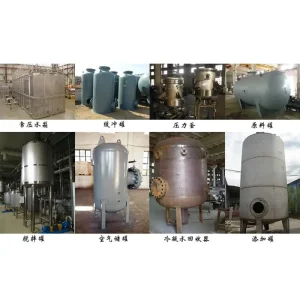
A2 certified manufacturing for heavy-duty heat exchangers, separator drums, and vacuum jacketed storage.
Lifecycle engineering support from structural modeling to commissioning and optimization.
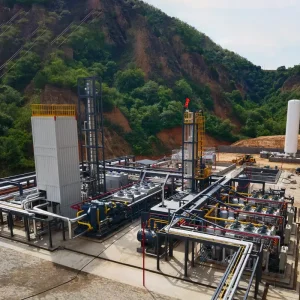
Innovative modular configurations designed for natural gas, biogas, and coalbed methane upgrading.
Mobile autoclaves and high-temperature steam sterilizers for remote medical waste processing.
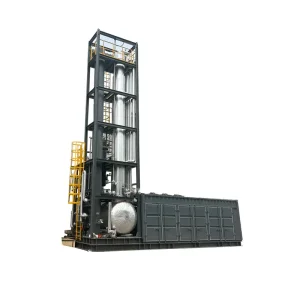
High-performance gas cleaning solutions including deacidification, dehydration, and hydrocarbon removal.
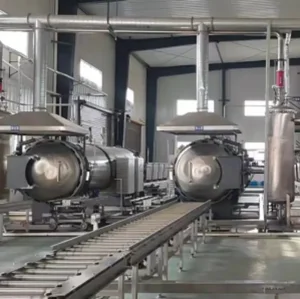
Industrial-scale steam treatment systems designed for regional medical waste treatment plants.
 Hongke Qingneng