High-integrity process units, autoclaves, and cryogenic skid systems manufactured to strict ASME and GB standards.
Established in June 2021 with a registered capital of 78 million yuan, Hebei Hongke Qingneng Environmental Protection Equipment Co., Ltd. is a high-tech pioneer based in the Sanhe Economic Development Zone, Langfang City. We represent the zenith of research-to-industrial execution, focusing on the research, development, and high-end manufacturing of pressure vessels and ecological protection systems.
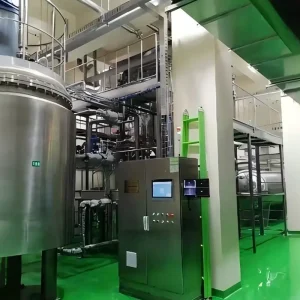
Our core manufacturing capabilities cover the complete spectrum of pressure engineering: custom non-standard pressure vessels, cryogenic gas processing units, biological wastewater and hazardous pathogentic fluid inactivation plants, mobile and centralized medical waste high-temperature autoclaves, and helium/BOG tail gas extraction packages.
Combining doctoral research with advanced A2 pressure certifications to build safer, more reliable systems.
Our R&D backbone features elite scientists from Tsinghua University and the CAS Institute of Physics and Chemistry. Holding multiple independent intellectual property patents, we bridge the gap between advanced thermal dynamics and robust industrial equipment manufacturing.
We hold the prestigious A2-level Pressure Vessel Manufacturing License and the Pressure Pipeline Components Manufacturing License. Certified under GB/T19001-2016 (ISO 9001), Sinopec HSSE, and CNPC HSE management systems, we operate as a verified supplier to major oil and gas players.
Our solutions target emissions reduction and resource recovery. By designing advanced skid-mounted liquefaction facilities, VOC containment vessels, and biological sterilization plants, we enable global industrial operators to meet strict ESG mandates and global net-zero goals.
Our design protocols are developed by leading Chinese thermodynamicists and process control experts.
Holding a Ph.D. from the CAS Institute of Physics and Chemistry Technology, Dr. Sun is a national senior engineer. He has led projects under the National 863 Program, the Natural Science Foundation, and spaceflight components initiatives. Recipient of the Special Prize of Technological Invention of the Chinese Society of Refrigeration (2015) and the Beijing Science and Technology Award (2016).
A PhD candidate and Senior Engineer at the CAS Institute of Physics and Chemistry Technology. He has managed large-scale aerospace, military, and energy projects. Author of 24 domestic and international academic papers (11 indexed in SCI/EI) and inventor of 5 national patents. Winner of the Beijing Science and Technology Award.
Doctor of Engineering from CAS. His breakthrough research in thermodynamic properties, multi-component mixed working medium phase changes, and heat transfer characteristics led to the design of the standard skid-mounted LNG system. Recognized with the Chinese Refrigeration Society Special Prize.
A comprehensive breakdown of safety factors, material selection, code compliance, and global trends for nitrogen storage solutions.
Nitrogen pressure vessels are critical assets across modern industrial processes, playing key roles in chemical inerting, semiconductor fabrication, and LNG purification systems. Storage vessels must handle both ultra-low temperature liquid nitrogen (LN₂ at -196°C) and high-pressure gaseous nitrogen (N₂ at pressures up to 35 MPa).
Industrial operations face major risks from cryogenic embrittlement and stress cracking. At low temperatures, standard carbon steels undergo a transition from ductile to brittle behavior, making them prone to sudden structural failure. Minimizing hydrogen embrittlement and maintaining vacuum insulation performance are key challenges for manufacturers worldwide.
Additionally, keeping nitrogen pure within the vessel is critical for the semiconductor and electronics industries, where even tiny amounts of hydrocarbons or moisture can ruin entire manufacturing runs.
To ensure safety under extreme pressure and temperature cycles, our engineering team uses specialized alloys. We construct cryogenic inner vessels using austenitic stainless steels (such as 304, 304L, 316, and 316L) and 9% nickel steels, which maintain excellent impact toughness below zero.
Our designs comply with leading international standards, including ASME Section VIII Division 1 & 2, European CE-PED, and China's GB 150 code. We use finite element analysis (FEA) to model stress points around nozzles and supports, helping prevent fatigue-induced cracking during pressure cycles.
Every vessel undergoes non-destructive testing (NDT), such as radiographic, ultrasonic, and helium mass spectrometer leak testing down to a rate of 1×10⁻⁹ Pa·m³/s, ensuring long-term seal integrity in high-vacuum installations.
How the transition to clean energy and smart manufacturing is shaping the design of pressure vessels.
Industrial operators are moving away from onsite-built storage in favor of skid-mounted, factory-tested modules. Pre-wired and pre-piped assemblies reduce field installation times, lower civil engineering costs, and ensure consistent manufacturing quality.
Modern pressure vessels feature built-in smart sensors. By integrating temperature transmitters, strain gauges, and vacuum monitors with IoT gateways, operators can track vessel health in real time, predict maintenance needs, and prevent unscheduled downtime.
The global push for carbon reduction is driving demand for high-purity nitrogen recovery systems. Reclaiming and purifying nitrogen purge gases in LNG plants and chemical processes helps companies lower emissions and cut raw material costs.
Our research plan for the next generation of cryogenic storage and pressure vessel technologies.
Improving vacuum-jacketed designs with multi-layer insulation (MLI) systems using fiberglass and aluminum foil shields. Our goal is to reduce boil-off rates (BOR) to less than 0.15% per day for liquid nitrogen tanks, minimizing product loss during long storage periods.
Expanding the use of automated plasma arc and orbital TIG welding systems. Integrating real-time weld monitoring and ultrasonic inspection ensures defect-free seams in A2-certified pressure vessels and heat exchangers.
Developing ultra-low temperature separation units capable of operating down to -180°C. These systems are designed to extract helium from BOG tail gases and recover high-purity nitrogen from industrial waste streams.
Our pressure vessel systems are field-tested in demanding industrial, medical, and environmental processes.
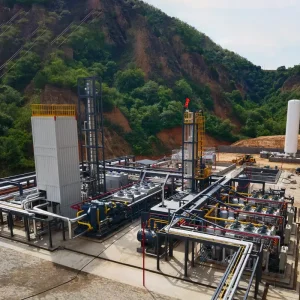
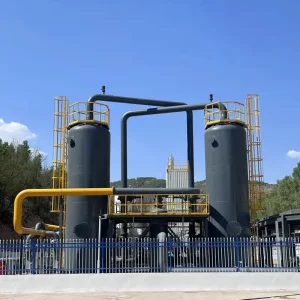
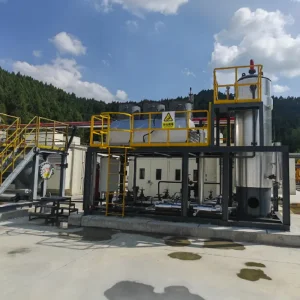
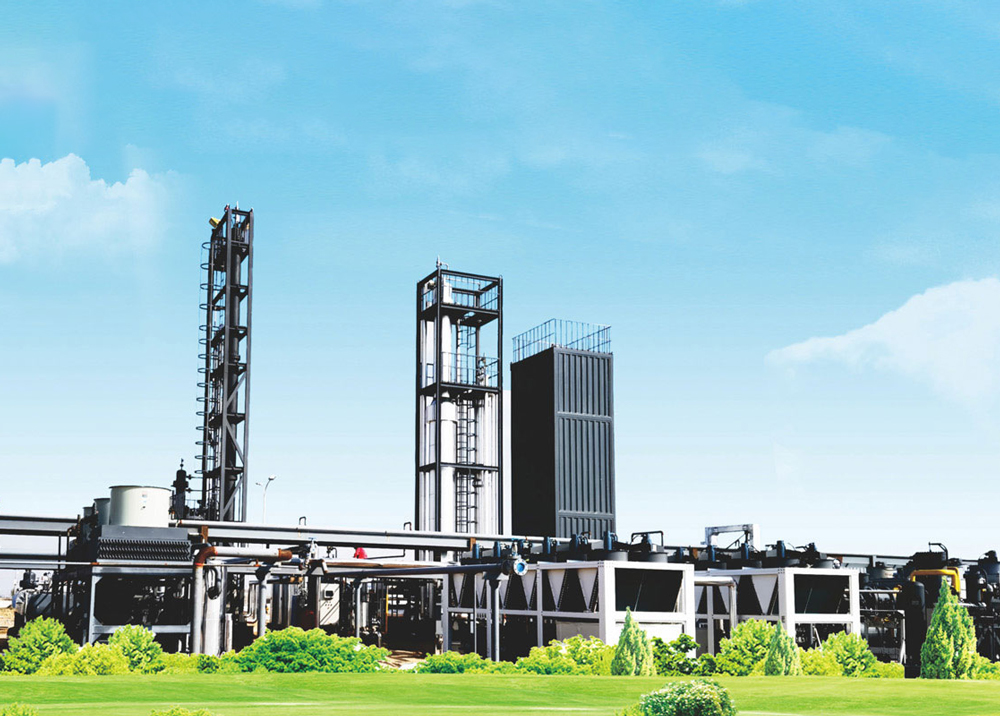
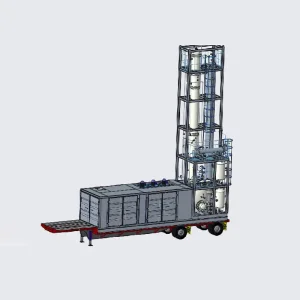
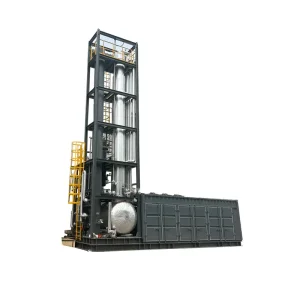
We design and supply skid-mounted LNG liquefaction systems, gas desulfurization towers (for H₂S removal), and heavy hydrocarbon removal columns. Our purification plants enable efficient processing of natural gas, coalbed methane, and shale gas.
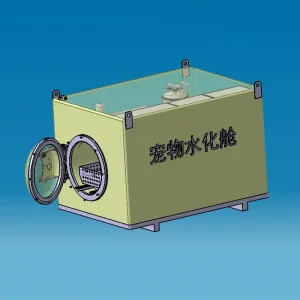
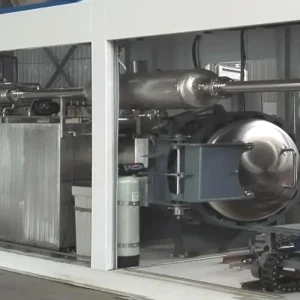
Using our pressure vessel expertise, we manufacture high-temperature steam sterilization systems for centralized and mobile medical waste disposal, as well as animal carcass hydrolysis chambers. These systems operate under high pressures and corrosive environments, relying on robust mechanical seals and advanced safety controls.
Clear answers to common questions about pressure vessel design, material standards, and compliance.
Explore our full line of environmental systems, gas purification equipment, and heavy-duty pressure vessels.
 Hongke Qingneng