Engineered to the highest industry standards for extreme pressure and thermal applications.
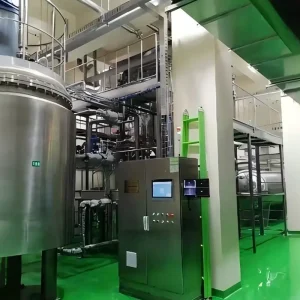
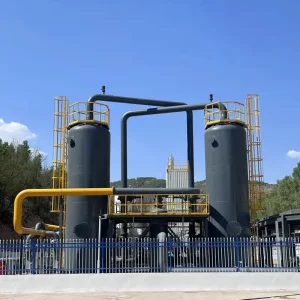
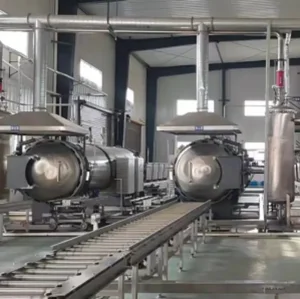
An in-depth analysis of design safety, optimization, and system integration.
In modern industrial manufacturing, compressed air and gas systems serve as the lifeblood of primary operations. A welded air receiver (frequently designated as an air receiver tank or surge vessel) is not merely a static containment vessel; it acts as a critical dynamic buffer. It dampens pressure pulsations from reciprocating or rotary screw compressors, optimizes energy consumption by reducing compressor cycle frequency, precipitates moisture from the gas stream, and provides a strategic reserve of compressed air to absorb transient demand spikes. Standardizing high-quality welded vessels guarantees plant reliability, reduces fatigue-induced mechanical failure, and elevates downstream air quality.
Designing and fabricating a welded air receiver demands compliance with rigorous mechanical engineering principles and safety mandates. Because compressed air stores significant potential energy, failures can be catastrophic. Thus, choosing a qualified supplier with certified pressure vessel manufacturing credentials—such as the Chinese A2-level pressure vessel manufacturing license or international standards like ASME Section VIII Div. 1—is a vital procurement criterion.
A high-quality welded air receiver must be configured based on precise operating criteria. Engineering parameters generally include:
| Parameter / Feature | Technical Standards & Details | Engineering Value / Purpose |
|---|---|---|
| Design Standard Compliance | ASME Section VIII Div 1, GB/T 150 (China Standard), EN 13445 | Ensures international regulatory compliance and safety reliability. |
| Structural Materials | Q345R, Carbon Steel, Stainless Steel (304, 316L, Duplex) | Provides high tensile strength and corrosion resistance for diverse environments. |
| Welding Methodologies | Submerged Arc Welding (SAW), Gas Tungsten Arc Welding (GTAW) | Delivers deep penetration welds with minimal residual stresses. |
| NDT Inspection Methods | 100% Radiographic Testing (RT) & Ultrasonic Testing (UT) | Identifies micro-defects or internal voids inside the weld lines. |
| Corrosion Protection | Internal epoxy lining, external hot-dip galvanization, polyurethane paint | Prevents oxidative corrosion triggered by condensed acidic moisture. |
| Operating Temperatue Range | -40°C to +150°C (Custom configurations available) | Ensures cold-start capability and thermal cycling stability. |
When warm compressed air enters a receiver tank, the velocity drops dramatically, inducing cooling. This temperature drop causes moisture (water vapor) and residual compressor oils to condense. The structural design of the welded air receiver must include dedicated drainage ports (both automatic zero-loss drains and manual bypass lines) at the absolute lowest point of the shell. Internal baffles are frequently integrated to promote centrifugal air flow, which mechanically separates liquid aerosols from the dry gas stream prior to leaving the discharge nozzle.
Discover why global enterprises choose Chinese manufacturing corridors for high-capacity air storage.
Based in the Sanhe Economic Development Zone, Langfang City, China, our facilities sit at the epicentre of world-class steel fabrication clusters. We procure top-tier raw materials (such as Q345R pressure vessel steel plates) directly from leading domestic mills like Shougang and Angang Steel, ensuring zero material tracing gaps at highly competitive rates.
By partnering with prestigious institutions like Tsinghua University and the Institute of Physics and Chemistry Technology, Chinese Academy of Sciences (CAS), we deploy robotic SAW setups, automated head spinning machinery, and computer-controlled heat treatment ovens. This high-tech ecosystem guarantees consistent weld geometry and reduces human error.
Our Quality Assurance protocols are built directly into the manufacturing floor. Every welded air receiver undergoes rigorous hydrostatic testing at 1.3 to 1.5 times the design pressure, combined with digital radiographic profiling (RT) of all circumferential and longitudinal joints, eliminating potential micro-fractures before shipment.
Hebei Hongke Qingneng Environmental Protection Equipment Co., Ltd.
Established in June 2021 with a registered capital of 78 million yuan, Hebei Hongke Qingneng Environmental Protection Equipment Co., Ltd. is positioned as a leading R&D and manufacturing powerhouse in the energy conservation and environmental protection sector. Located in the Sanhe Economic Development Zone, Langfang City, our industrial base features advanced equipment for pressure vessel design, fabrication, and performance testing.
The company is fully certified and engaged in the engineering and production of diverse non-standard pressure vessels, including high-capacity welded air receivers, specialized surge tanks, medical waste treatment machinery, eco-friendly pet hydration chambers, chemical tail gas treatment processors, and industrial refrigeration systems ranging from -40°C down to -180°C.
Combining theoretical breakthroughs with world-class manufacturing execution.
Ph.D. from the Institute of Physics and Chemistry Technology, Chinese Academy of Sciences (CAS). National Senior Engineer. Dr. Sun has successfully directed numerous major national programs, including the National 863 Program and space-grade military defense projects. Under his leadership, the company has secured over 20 proprietary patents and pioneered modular skid-mounted liquefaction technology.
General Manager and researcher at the Institute of Physics and Chemistry Technology, CAS. Zou Xin has published 24 peer-reviewed academic papers (including 11 indexed by SCI/EI) and holds multiple national invention patents. He leads the commercial operations, market expansion, and QA compliance systems for our pressure vessel production lines.
Doctor of Engineering from the Institute of Physics and Chemistry Technology, CAS. Dr. Cheng is a renowned authority on phase change heat transfer characteristics and mixed working medium flows. He oversees our pressure vessel process design, structural integrity modeling, and custom stress calculations to ensure complete ASME compliance.
Leveraging deep industrial experience and strict certification guidelines.
We hold the highly coveted A2 level pressure vessel manufacturing license, pressure piping component manufacturing license, GB/T19001-2016 Quality Management System certification, and the comprehensive Sinopec HSSE / PetroChina Health, Safety, and Environment Management System certifications. This legal framework qualifies us to supply critical pressure containment systems to high-risk petrochemical installations worldwide.
From industrial compressed air supply to high-purity natural gas processing and skid-mounted LNG installations, our welded air receivers and pressure vessels are engineered for durability. We offer customized design configurations to handle extreme pressures, high temperatures, vacuum conditions, and cryogenic storage down to -180°C.
Driven by the ethos of "innovation-driven development, service-leading upgrading," our engineered pressure vessels support air pollution control, carbon capture, VOC gas recovery, and environmental safety, providing sustainable, one-stop solutions for the global energy transition.
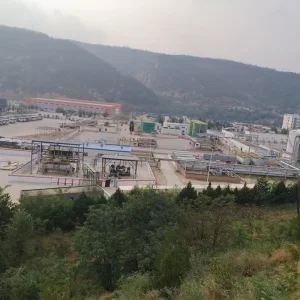
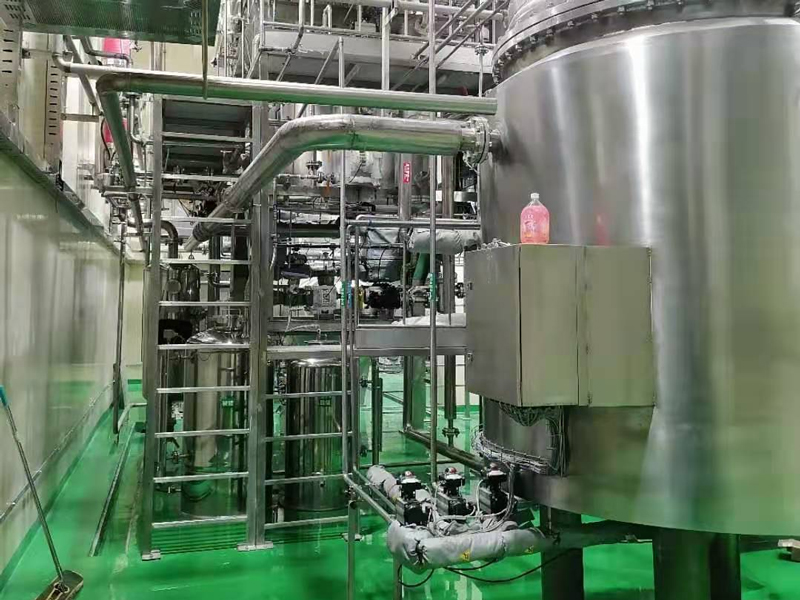
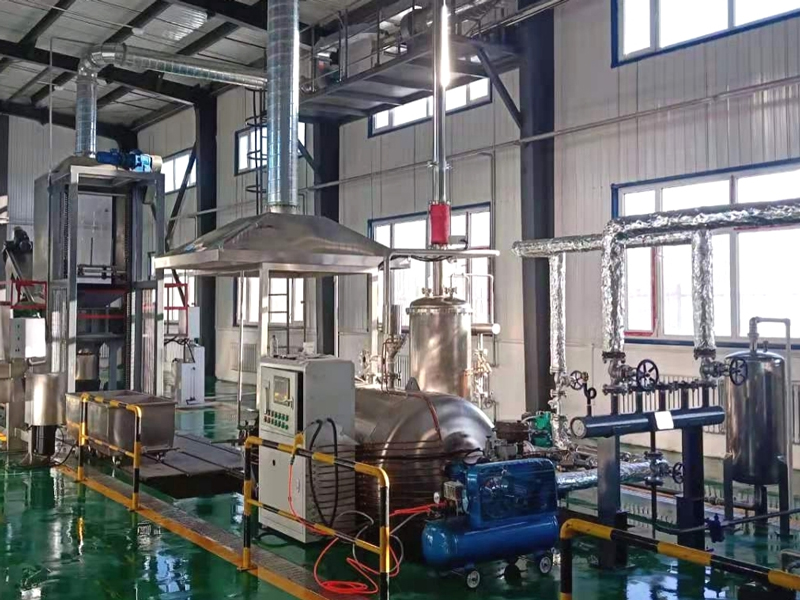
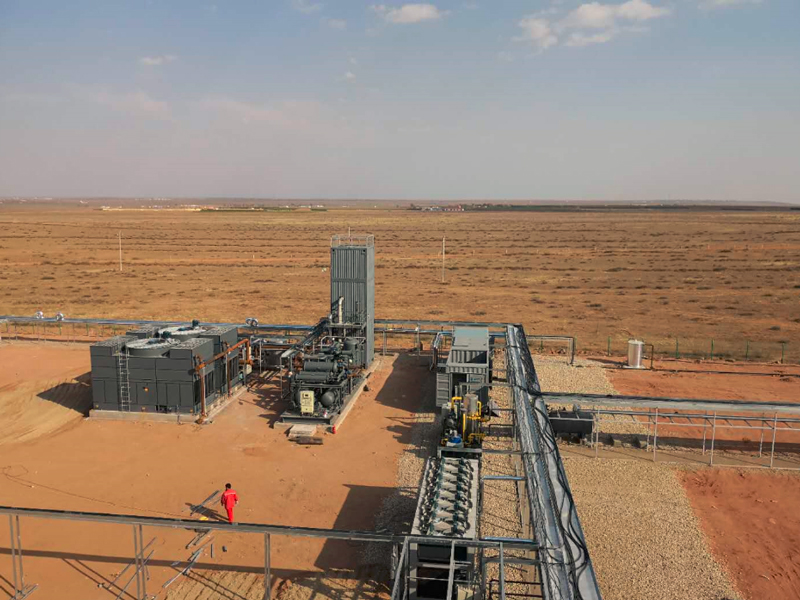
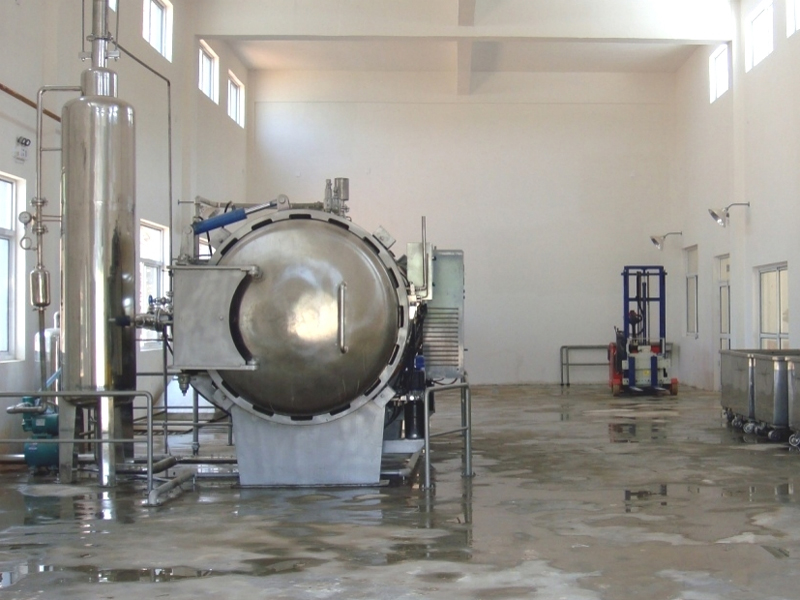
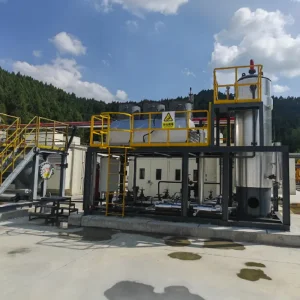
Proven project deployment and execution on site.
Key checkpoints for international engineers, EPC contractors, and procurement departments.
Purchasing engineered pressure vessels from China requires a clear technical framework to match local design regulations. When drafting request for quotes (RFQs), international buyers should address the following areas:
Ensure your chosen manufacturer provides a Mill Test Certificate (MTC) to EN 10204 3.1 or 3.2. This document verifies the steel’s chemical composition, heat number, and physical properties (tensile strength, yield strength, impact energy). The manufacturer must also execute Charpy V-notch impact tests for low-temperature applications to verify the steel will not suffer brittle fracture.
Thick-walled welded air receivers are subject to severe residual stresses at the weld zones. PWHT relieves these internal stresses by heating the entire vessel in a furnace to a predetermined temperature (typically around 600°C for carbon steel) and cooling it at a controlled rate. This process improves structural ductility and resistance to stress corrosion cracking (SCC).
A reliable welded air receiver requires essential safety components. Every vessel should be fitted with:
Get answers to common technical, engineering, and regulatory questions.
A: In China’s regulatory framework, the A2 certification is a high-level manufacturing qualification issued by the State Administration for Market Regulation. It authorizes the company to design and manufacture medium and low-pressure vessels (both welded and non-welded, including carbon steel, stainless steel, and alloy vessels) without volume restrictions. This license indicates high welding competence, robust NDT compliance, and rigorous quality control.
A: As a general engineering rule of thumb, the receiver tank's volume should be between 10% and 20% of the total free air delivery (FAD) rate of the connected compressor system (measured in m³/min or CFM). For applications with highly variable air demands or pulsed processes, the sizing factor must be scaled up to prevent excessive compressor cycling, which reduces motor life and increases energy consumption.
A: For applications in pharmaceutical medical waste treatment, laboratory animal hydrolysis, or high-humidity coastal settings, stainless steel grades like SS304 or SS316L are recommended. For standard industrial compressed air applications, high-tensile carbon steels (like Q345R or SA516 Gr. 70) paired with an internal anti-corrosion epoxy lining offer a cost-effective alternative.
A: We follow GB/T 150 and ASME Section VIII quality controls. We apply Radiographic Testing (RT) and Ultrasonic Testing (UT) to detect internal weld flaws, along with Magnetic Particle Testing (MT) or Liquid Penetrant Testing (PT) for surface inspections. Every finished vessel is subjected to hydrostatic testing to verify its structural integrity.
A: Yes, we specialize in the custom engineering and skid-mounted assembly of complete process packages. This includes integrated air receivers, purification units (dehydration, deacidification), VOC exhaust treatment plants, and LNG liquefaction systems. Buying pre-tested, skid-mounted assemblies simplifies onsite installation and shortens commissioning times.
High-efficiency recovery, purification, and pressure containment systems.
 Hongke Qingneng