Advanced engineering designs ready to serve urban veterinary centers, laboratories, and agricultural hubs in Mexico City.
Mexico City (CDMX) and its surrounding metropolitan zone (Estado de México) constitute one of the densest industrial and urban environments in Latin America. Managing organic residues, biological waste, and animal carcasses from veterinary research hubs, slaughterhouses, university laboratories, and animal containment facilities presents critical logistical, sanitation, and environmental challenges. Traditional open-air disposal and incineration methods face strict scrutiny due to severe air quality regulations enforced by the Secretaría del Medio Ambiente (SEDEMA) and national bodies like SEMARNAT.
In this context, industrial operations require zero-odor, low-emission, and highly reliable treatment protocols. Standard incinerators frequently struggle with the particulate matter (PM2.5 and PM10) limits of the Valley of Mexico. High-temperature, high-pressure wet rendering and chemical hydrolysis have emerged as the gold standards. They guarantee pathogen destruction while capturing and processing volatile organic compounds (VOCs) and liquid effluents within closed loops.
All animal tissue treatment systems deployed within Mexico City must comply with strict Mexican Official Standards. Specifically, NOM-087-SEMARNAT-SSA1-2002 governs the classification and handling specifications of infectious environmental waste. Biological residues containing animal carcasses exposed to zoonotic pathogens, genetically modified organisms (GMOs) from academic research, or chemical hazards must undergo complete sterilization on-site or through specialized authorized centers before disposal in sanitary landfills.
For modern facility designs, selecting the appropriate technical route is critical. The table below outlines how our high-temperature hydrolysis technology compares with traditional incineration regarding operating cost, output quality, and ecological impact:
| Comparison Metric | High-Temperature Hydrolysis (Hongke Design) | Traditional Incineration Systems |
|---|---|---|
| Operating Temperature | 135°C to 160°C (High Pressure) | 850°C to 1100°C |
| Pathogen Inactivation | Complete destruction (including heat-resistant prions) | Complete destruction (dependent on burn time) |
| Flue Gas / Air Pollution | No combustion flue gases; easily scrubbed vapors | Heavy flue gas (requires complex ESP & acid scrubbers) |
| Carbon Footprint | Up to 70% lower energy requirements | High auxiliary fuel consumption (natural gas/diesel) |
| By-Product Valuation | Sterile, nutrient-rich meal or fertilizer base | Ash waste requiring hazardous landfill disposal |
By utilizing saturated steam under pressure, our biological tissue treatment vessels break down complex proteins and lipids at a molecular level. This process is accelerated through precise mechanical agitation inside the A2-rated pressure vessels. Crucially, the volatile organic gases produced during heating are routed through localized condensation loops and chemical scrubbers, ensuring that the facility maintains an completely odorless working environment—a key requirement for urban zones within Mexico City's industrial parks.
In addition to organic tissue processing, we provide integrated purification and emission control modules to secure full site compliance.
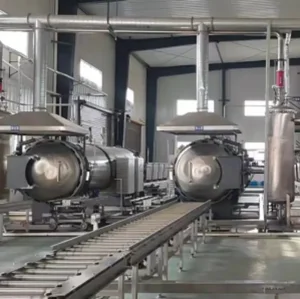
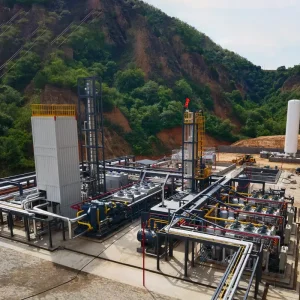
Established in June 2021 with a substantial registered capital of 78 million yuan, Hebei Hongke Qingneng Environmental Protection Equipment Co., Ltd. is positioned in the Sanhe Economic Development Zone, Langfang City, Hebei. We are a specialized manufacturer dedicated to high-performance pressure vessels, organic sterilization systems, and cryogenic skid-mounted systems. Our manufacturing facility holds prestigious Chinese national design and manufacturing qualifications, including the A2-level pressure vessel license and complete ISO 9001/ISO 14001 integrations.
Our competitive edge lies in our R&D engineering team, consisting of senior thermodynamics experts from Tsinghua University and the Institute of Physics and Chemistry Technology, Chinese Academy of Sciences (CAS). This background guarantees that our heat exchangers, steam circulation loops, and cryogenic controls operate at peak thermodynamic efficiency, minimizing energy losses for industrial installations worldwide.
Ph.D. from the Institute of Physics and Chemistry Technology, Chinese Academy of Sciences. Recipient of multiple national scientific achievements, including the Special Prize of Technological Invention from the Chinese Society of Refrigeration and the Beijing Science and Technology Award.
Senior Engineer with a Ph.D. background at CAS. Dr. Zou has published over 24 academic papers and holds 5 national invention patents. He leads global market operations and custom industrial deployments.
Ph.D. in Engineering from CAS. Specialist in multi-phase heat transfer, thermal dynamics, and cryogenic gas recovery loops. Designed and commissioned over 50 large-scale skid systems globally.
Purchasing heavy environmental equipment requires absolute supply chain confidence. Our Langfang facility operates under advanced manufacturing principles, utilizing automated plasma welding stations, precise CNC machining centers, and non-destructive testing (NDT) labs to certify every weld. By controlling the entire manufacturing pipeline in-house, we eliminate reliance on third-party pressure vessel components, offering significant cost advantages and direct control over lead times.
For international buyers in Mexico City, we manage shipping, customized import documentation, and seaport handling protocols. Our equipment structures are designed to standard container and flat-rack sizes, simplifying logistics and minimizing freight expenses to major Mexican ports, such as Veracruz or Manzanillo.
Our pressure vessel systems are manufactured to align with GB 150 code specifications, which can be certified to match international ASME Section VIII standards. We provide full mill test reports (MTR), radiographic inspection records, and pressure validation certificates to assist local Mexican certification bodies (such as EMA - Entidad Mexicana de Acreditación) in validating and authorizing plant operation.
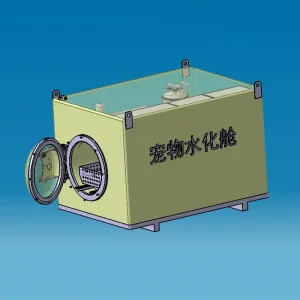
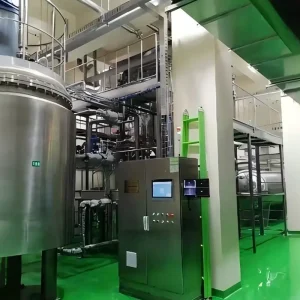
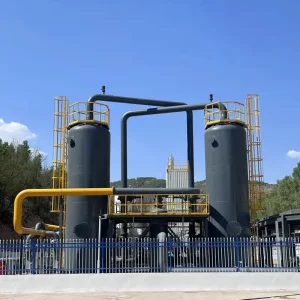
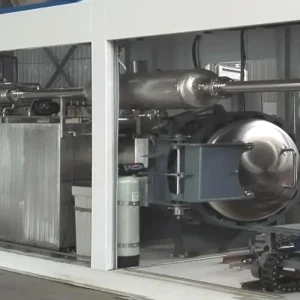
Real-world deployments showcasing our capabilities in high-temperature sterilization, animal tissue handling, and gas treatment.
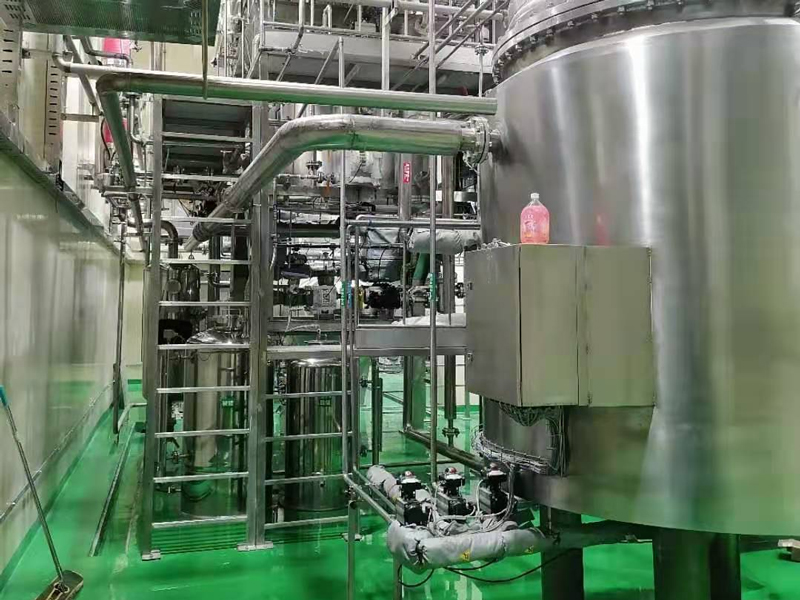
Designed for university research bio-parks. High-pressure thermal processing.
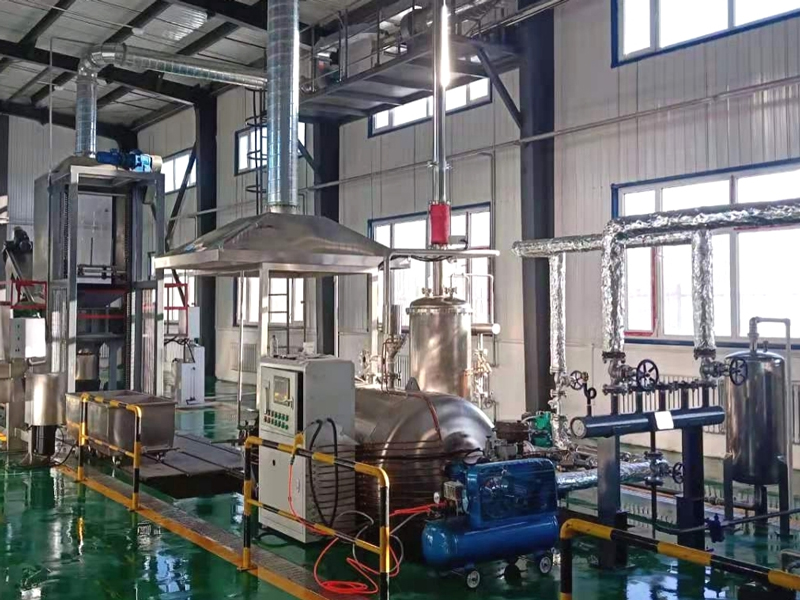
Containerized rapid deployment unit for quarantine and emergencies.
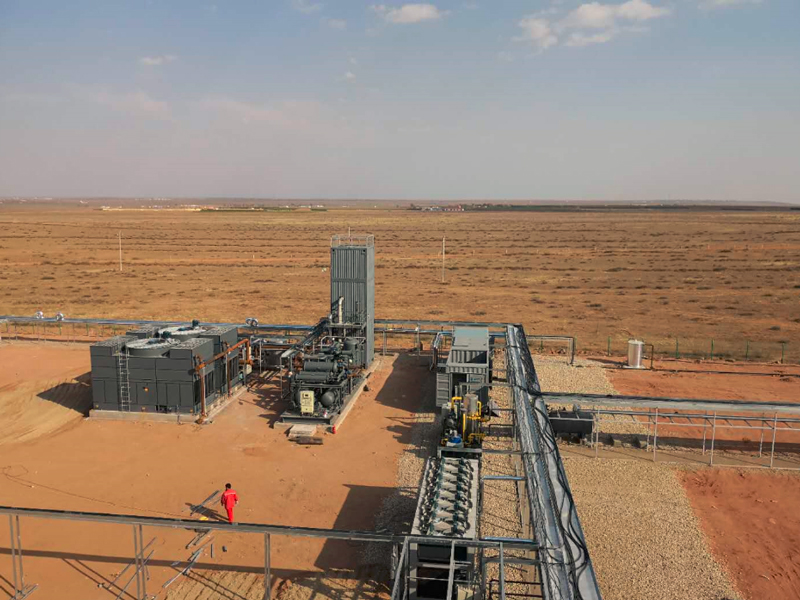
Advanced mixed-refrigerant liquefaction system designed by CAS experts.
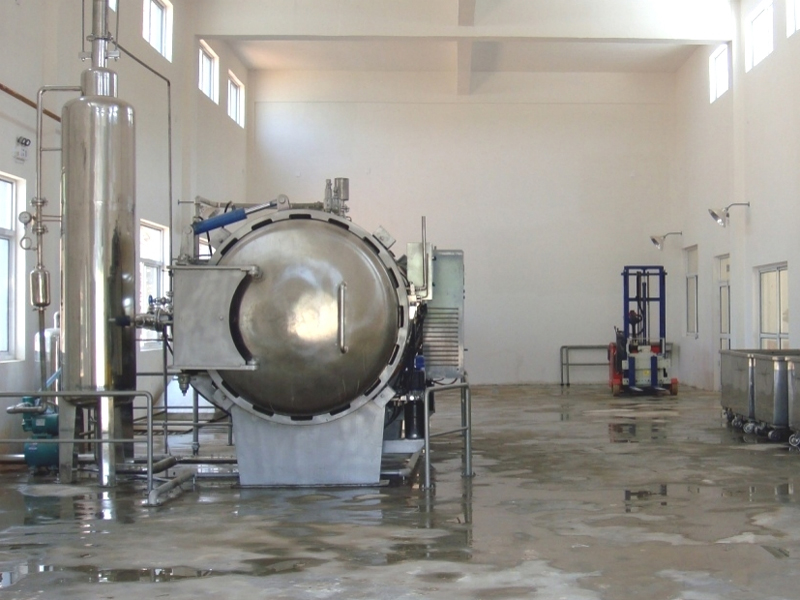
High-volume processing terminal featuring automated line loading.
Complete product range of pressure vessels, mobile sterilizers, desulphurisation plants, and purification technologies.
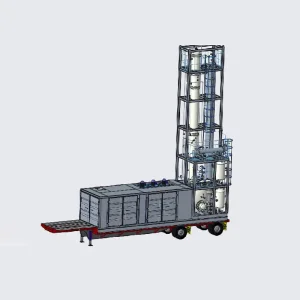
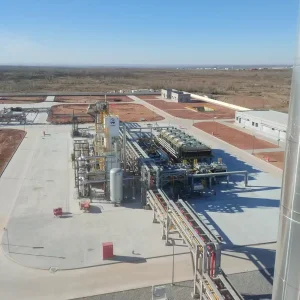
Key information regarding procurement, technical specifications, and regulatory compliance for Mexico City projects.
Our systems utilize pressurized saturated steam at temperatures ranging from 135°C to 160°C under 3 to 6 bars of pressure. This environment breaks down protein structures, destroying viruses, bacteria, and complex prions (such as those causing TSE/BSE), rendering the final byproduct sterile and safe.
Yes, our vessels are designed to GB 150 standard codes and can be supplied with ASME Section VIII stamps. We provide complete quality and pressure verification documentation, which can be submitted to EMA (Entidad Mexicana de Acreditación) or local municipal safety inspectors for project licensing.
Our systems use closed-loop designs. All vents from the hydrolysis chamber pass through multi-stage condensers, acid/alkali scrubbers, and active carbon beds (or biofilters), ensuring that the exhaust air released meets the strict atmospheric regulations of Mexico City.
Standard design fabrication takes 60 to 90 days at our factory. Shipping from Tianjin Port to major Mexican gateways (Manzanillo or Veracruz) typically takes 25 to 35 days. We provide complete logistics coordination for local port clearing.
Yes, our mobile steam treatment systems are skid-mounted and pre-installed within 20ft or 40ft HQ containers, allowing them to be transported by truck to any location in the Valley of Mexico for immediate biosecurity intervention.
 Hongke Qingneng