Pre-engineered modular cryogenic plants and key gas processing solutions optimized for the specific atmospheric conditions and gas composition profiles of Jabodetabek and surrounding regions.
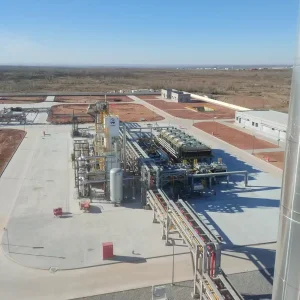
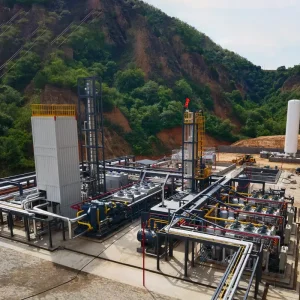
As the largest metropolitan economy in Southeast Asia, the Greater Jakarta area (Jabodetabek) is witnessing a structural shift in its energy mix. Fueled by Indonesia’s national commitments to carbon neutrality and the reduction of local emissions, industrial sectors in West Java—ranging from heavy manufacturing in Bekasi and Karawang to maritime logistics around the Port of Tanjung Priok—are rapidly replacing liquid fuels like diesel and heavy fuel oil (HFO) with natural gas and liquefied natural gas (LNG). A central challenge in this transition remains supply security for off-grid industrial users and decentralized power grids.
For distributed factories, independent power producers (IPPs), and municipal utility operations in Jakarta, skid-mounted modular liquefaction plants offer an optimized path to lock in supply and capture pricing spreads. Implementing localized liquefaction capability enables gas distribution companies to establish "virtual pipelines," trucking high-density LNG directly from stranded wells or major distribution hubs to high-demand manufacturing zones, bypassing the constraints of pipeline infrastructure.
The operational landscape of Jakarta requires distinct structural adaptations for processing machinery. Cryogenic gas liquefaction systems operating in tropical maritime environments face elevated ambient temperatures (averaging 28°C to 34°C) and high relative humidity. Standard off-the-shelf liquefaction equipment often suffers from efficiency losses under these conditions. Our engineering solutions address these specific geographic factors through:
Our technical consortium, driven by academic research and advanced manufacturing standards, delivers industry-leading operational efficiencies for demanding processing environments.
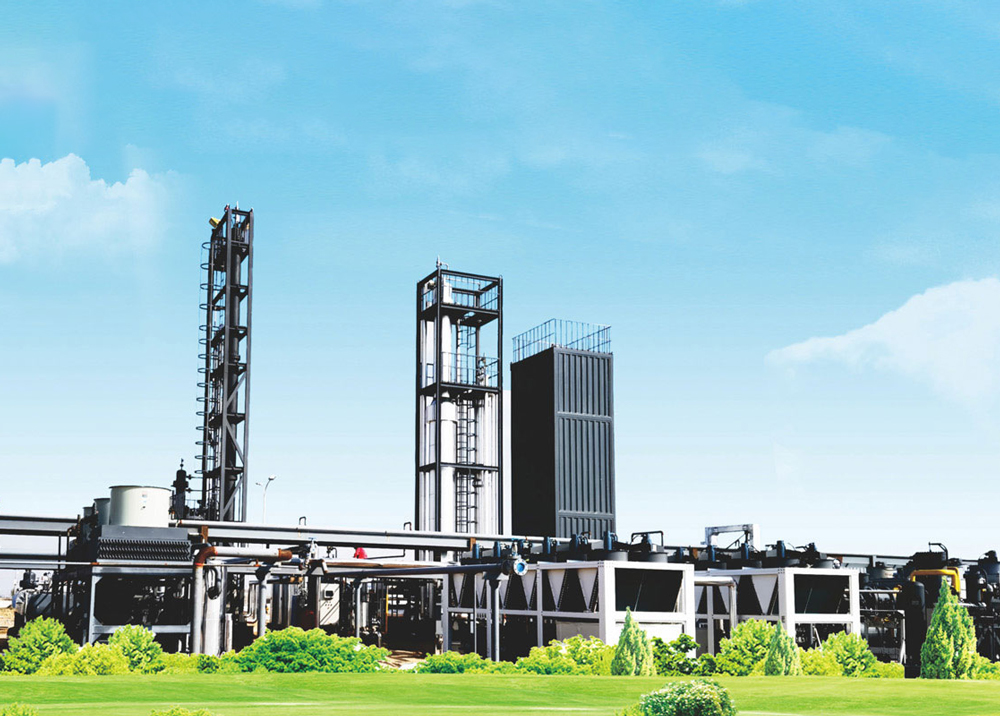
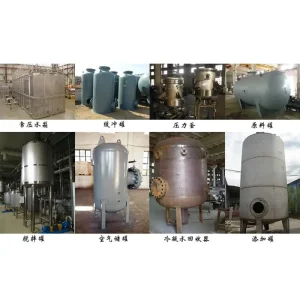
Hebei Hongke Qingneng Environmental Protection Equipment Co., Ltd. was established in June 2021, with a registered capital of 78 million yuan. Located in the industrial base of Sanhe Economic Development Zone, Langfang City, we focus on the R&D and manufacturing of energy conservation and environmental protection systems. The company specializes in the custom design, engineering, and manufacturing of various pressure vessels, medical waste high-temperature steam treatment units, animal tissue treatment systems, biological wastewater treatment plants, and complete skid-mounted process assemblies.
Our natural gas and gas purification business division provides turn-key solutions for coalbed methane, shale gas, and natural gas purification and liquefaction, VOC treatment, chemical tail gas processing, industrial refrigeration, and BOG (Boil-Off Gas) recovery including helium extraction. Utilizing state-of-the-art manufacturing facilities, we deliver high-performance equipment designed to help industrial clients reduce emissions and optimize resource utilization.
Combining academic research from China's top institutions with comprehensive certifications and strict quality control protocols.
Our engineering team includes specialists from Tsinghua University and the Institute of Physics and Chemistry Technology, Chinese Academy of Sciences (CAS). We hold numerous proprietary patents in skid-mounted liquefaction technology and thermodynamic separation systems.
We hold an A2-level pressure vessel manufacturing license, pressure pipeline component manufacturing licenses, GB/T19001-2016 quality management system certification, and Sinopec HSSE / CNPC Health, Safety, and Environment management certifications.
Our environmental and cryogenic units are engineered to eliminate industrial emissions, capture waste flared gases, and significantly lower Scope 1 emissions, contributing to regional pollution control and global decarbonization targets.
Our core research and engineering personnel bring decades of cryogenic, thermodynamic, and process design expertise to every project.
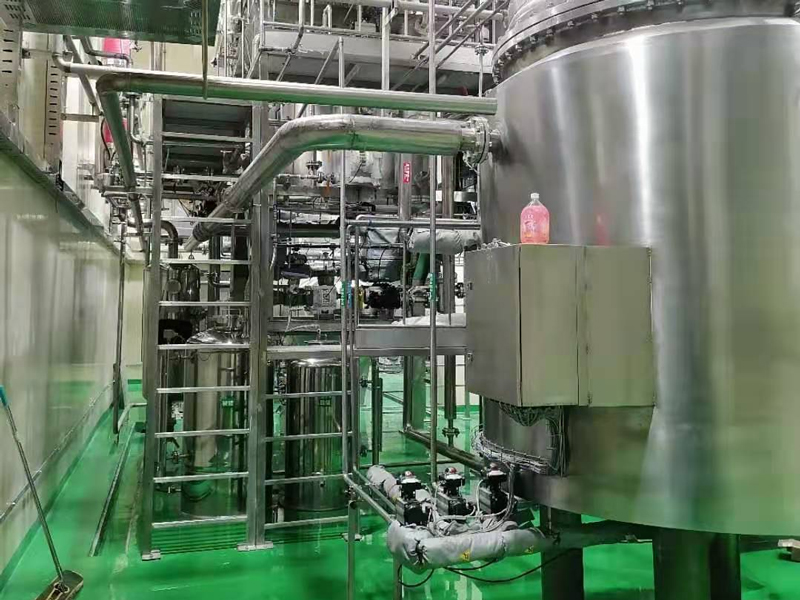
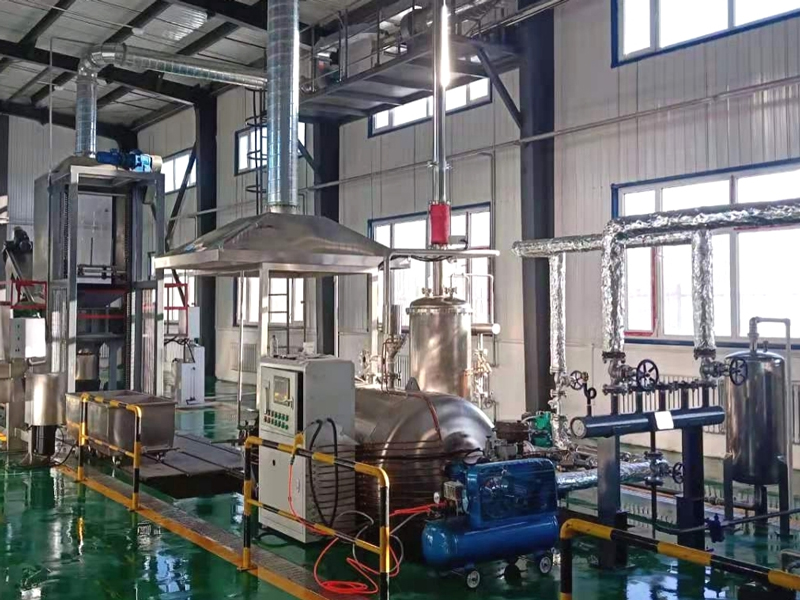
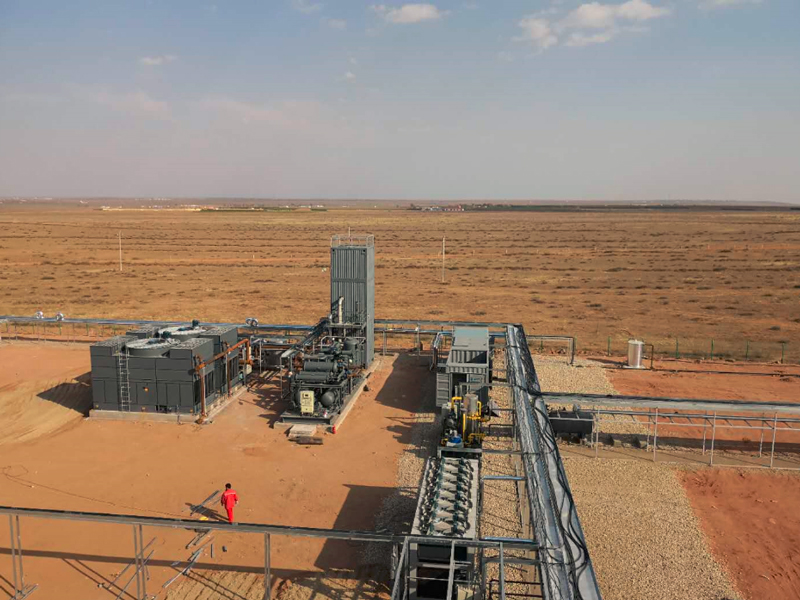
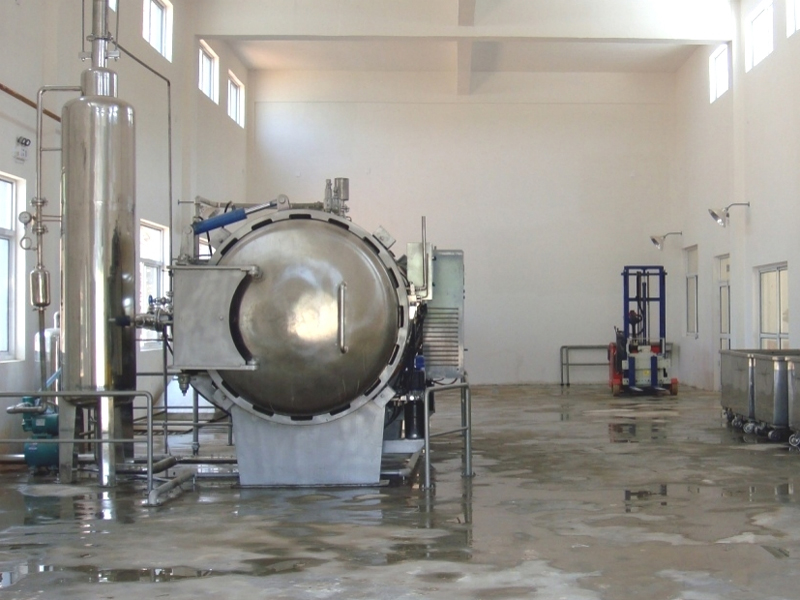
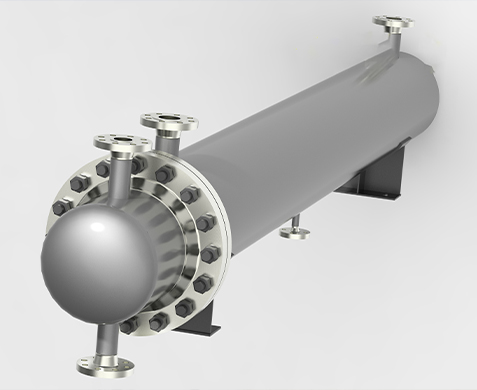
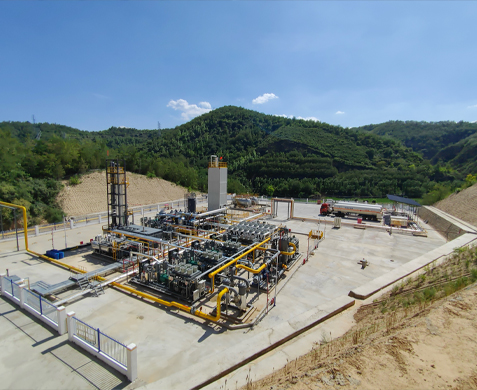
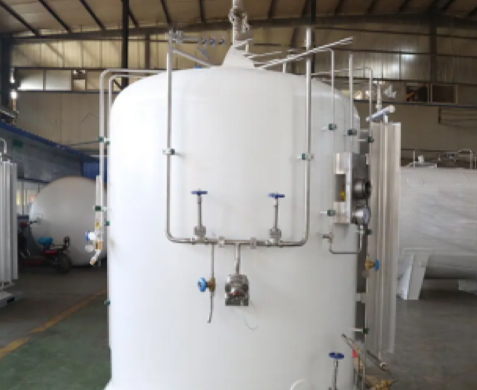
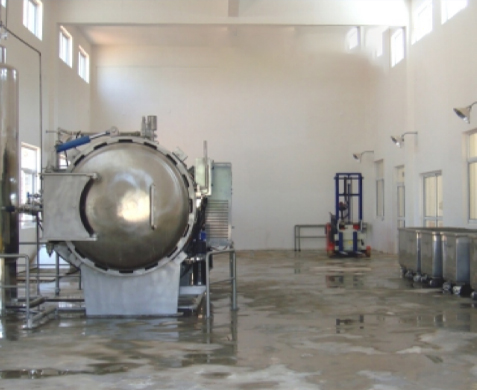
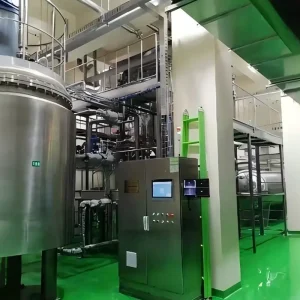
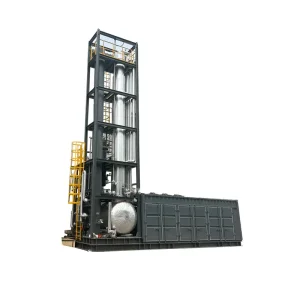
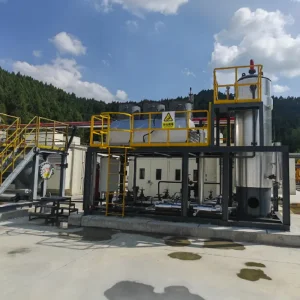
Selected industrial installations showing environmental treatment and skid-mounted processing units in field operations.
Technical guidance for EPC firms, utility companies, and industrial gas procurement departments in Indonesia.
Our plants are designed with power optimization in mind. Depending on feed gas pressure and composition, the specific energy consumption for a Single Mixed Refrigerant (SMR) cycle typically ranges from 0.32 to 0.38 kWh/Nm³ of gas processed. Higher feed pressures require less work from the refrigeration compressors, lowering energy intensity. Standard units run on 380V/50Hz industrial electrical supplies, but custom transformers and integrated gas generator sets can be integrated for remote, off-grid gas fields in regions without stable utility access.
High ambient temperatures reduce the temperature difference in air coolers, which elevates the discharge temperature of the compressor and increases power consumption. To maintain performance in Jakarta’s tropical climate, our design incorporates enlarged condenser heat transfer surfaces, high-efficiency fan motors, and custom mixed refrigerant ratios (often adjusting nitrogen and pentane concentrations) to balance heat loads across the cycle. For sites with available water supply, an integrated cooling tower configuration can be deployed.
Any concentration of CO₂ above 50 ppm will solidify at cryogenic temperatures, leading to plugging of the cold box. We deploy pre-purification systems featuring MDEA (Methyldiethanolamine) absorption or molecular sieve adsorption blocks to strip out acid gases and reduce H₂S to pipeline specifications. These systems are automated and coupled with gas chromatograph sensors to continually verify composition before the feed gas enters the cryogenic heat exchanger.
Yes. Although we carry standard Chinese GB certifications (such as Class A2 pressure vessel manufacturing licenses), our factory frequently manufactures equipment under ASME Section VIII specifications, featuring U/U2 stamps, to meet local regulatory and corporate standards in Indonesia. All structural welding, non-destructive testing (NDT), and hydrostatic pressure tests are fully documented and certified by third-party inspection firms.
Our modular designs are optimized for global shipping. The width of standard skids is limited to 3.0–3.5 meters, and heights are kept under 4.0 meters, making them compatible with flat-rack shipping containers and standard heavy transport trailers in Jakarta. This minimizes road permit delays and allows transport through local tollways and port facilities.
We provide comprehensive lifecycle support, including remote monitoring and diagnostic capabilities linked directly to our technical center. During commissioning, our field engineers travel to the site in Indonesia to train local operators. Critical wear parts and instrumentation elements are selected from globally recognizable brands (e.g., Siemens, Emerson, ABB) to ensure rapid component replacement and technical support is locally available in Jakarta.
Complete engineering specifications and product options. Use the links below to request specific data sheets and pricing sheets.
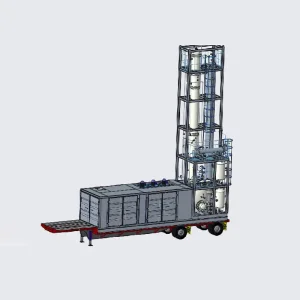
Submit your raw gas composition, daily flow requirements, and site location parameters to receive a custom thermodynamic process simulation and a detailed equipment quote from our senior engineering team.
Send Inquiry Now Hongke Qingneng