Advanced engineering modules designed for rapid deployment, high-purity yield, and seamless integration into Italian logistics and off-grid grids.
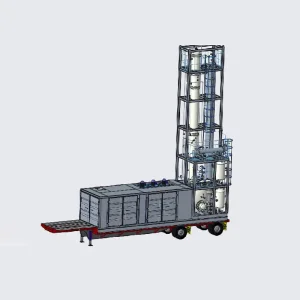
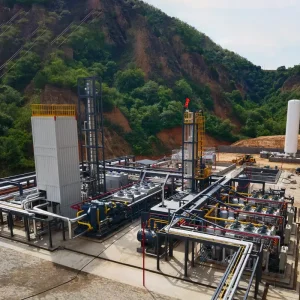
As the European Union intensifies its environmental directives and works to secure energy independence, Italy has positioned itself as a progressive leader in utilizing liquefied natural gas (LNG) and bio-liquefied biomethane (Bio-LNG). Supported by the Italian National Recovery and Resilience Plan (PNRR) and strict European decarbonization targets (Fit for 55), the nation's transportation, maritime, and industrial heavy-manufacturing sectors are systematically phasing out coal and heavy fuel oils. In this environment, skid-mounted and truck-mounted LNG plants offer the operational flexibility required to optimize resource delivery.
Historically reliant on pipelines from northern and eastern Europe, Italy's energy landscape is shifting toward a diversified, localized micro-grid architecture. Truck-mounted and skid-mounted systems facilitate the extraction and liquefaction of gas at stranded wells, marginal fields, and agricultural biogas facilities. This approach establishes a resilient supply chain that operates independently of pipeline networks. By decentralizing liquefaction capacity, Italian companies can reduce transportation losses, mitigate energy grid volatility, and supply fuel directly to refueling networks along core freight routes such as the Autostrada A4 and A22.
Italy’s Po Valley is one of Europe’s most intensive agricultural and livestock regions. This creates a substantial opportunity for biomethane upgrading. Skid-mounted liquefaction plants capture and process methane generated from agricultural waste and organic municipal fraction. This converts waste stream biogas into high-value Bio-LNG for heavy transport, aiding regional carbon neutrality initiatives.
Industrial installations, ceramic factories in Emilia-Romagna, and off-grid zones in Sardinia rely on virtual pipelines. Truck-mounted LNG units liquefy gas at source terminals and transport it to satellite gasification stations. This provides a constant fuel supply to regional manufacturing plants that lack physical pipeline connections.
The design of our truck-mounted and skid-mounted LNG systems is based on high-efficiency thermodynamic cycles. By utilizing either the Single Mixed Refrigerant (SMR) cycle or Nitrogen Expansion technologies, our engineering team ensures stable operation and minimal internal energy consumption, even in variable gas-feed environments.
| System Module | Technical Features | Operational Function in Italy |
|---|---|---|
| Pre-Treatment Skid | MDEA deacidification, molecular sieve dehydration, activated carbon heavy hydrocarbon removal. | Ensures compliance with European gas grid and engine fuel standards (reducing CO2 < 50 ppm, H2S < 4 ppm). |
| Liquefaction Cold Box | Plate-fin heat exchangers (brazed aluminum) utilizing SMR or N2-expansion cryogenic cycles. | Achieves liquefaction down to -162°C with minimal footprint, optimized for installation at space-constrained facilities. |
| BOG Recovery System | Cryogenic compressor/re-liquefaction loops powered by variable frequency drives (VFD). | Reduces Boil-Off Gas losses during storage and product transfer, maximizing product yields. |
| Control Skid (DCS/PLC) | Siemens or Allen-Bradley logic systems with ATEX-certified safety loops and remote telemetry. | Enables unmanned operations with remote oversight via SCADA, satisfying Italy's Industria 4.0 automation guidelines. |
For standard medium-to-large skid units (e.g., 50,000 to 150,000 Nm³/day), we implement our patented Mixed Refrigerant Cycle (MRC). The refrigerant mixture (nitrogen, methane, ethylene, propane, and isopentane) matches the cooling curve of the feed gas. This reduces thermodynamic irreversibility and lowers specific power consumption to approximately 0.28–0.32 kWh/Nm³ of liquefied gas. For remote, truck-mounted mobile units, the Nitrogen Expansion Process is preferred for its fast startup and shutdown times, simple operation, and safe refrigerant handling.
Our cryogenic processes are developed in collaboration with research institutes, including researchers from Tsinghua University and the Institute of Physics and Chemistry Technology of the Chinese Academy of Sciences (CAS). We combine basic cryogenic research with field-applied engineering experience to deliver reliable modular systems.
Ph.D. from the Institute of Physics and Chemistry Technology, Chinese Academy of Sciences. A senior engineer who has led major national science and technology projects. Recipient of the Special Prize of Technological Invention from the Chinese Society of Refrigeration (2015) and the First Prize of the Beijing Science and Technology Award (2016).
Ph.D. candidate and senior engineer with the Institute of Physics and Chemistry Technology, CAS. He has managed multiple national scientific programs and enterprise joint ventures. Author of 24 peer-reviewed academic papers (11 SCI/EI indexed) and holder of 5 national invention patents in cryogenic processes.
Ph.D. in Engineering from CAS. Awarded for the "Technology Development and Application of Skid-mounted Natural Gas Liquefaction Unit." An expert in phase change heat transfer characteristics and flow dynamics of mixed working mediums, bridging theoretical research and field applications.
Our manufacturing center is located in the Sanhe Economic Development Zone, Langfang City, Hebei Province. This strategic location places us within China’s premier industrial manufacturing corridor, allowing us to leverage a mature supply chain of raw materials, high-precision components, and advanced metallurgy.
This localized supply chain integration provides substantial benefits to our European and Italian partners:
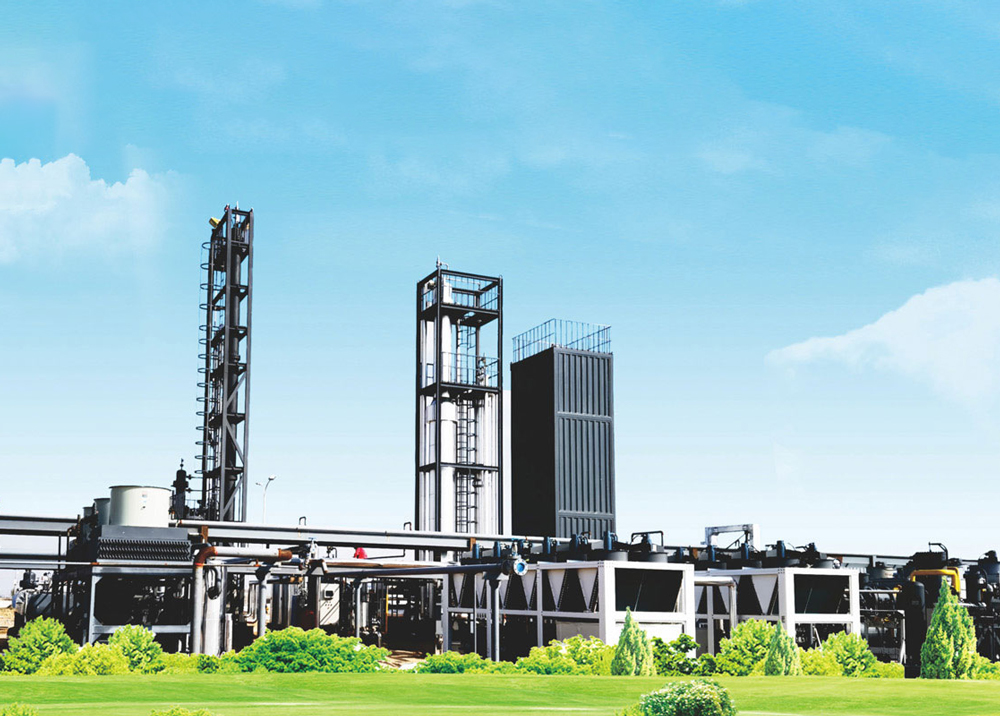
Exporting complex energy systems to the European Union requires compliance with strict safety and performance standards. Our engineering division works to ensure our equipment meets all relevant European and Italian regulatory requirements.
Our pressure vessels are designed and built in compliance with Directive 2014/68/EU (PED) and EN 13445 standards. Holding an A2-level pressure vessel manufacturing license, we coordinate with notified bodies to secure CE marking, satisfying the regulatory requirements of local Italian authorities.
To operate safely in Zone 1 and Zone 2 hazardous gas atmospheres, our control systems, electrical motors, sensors, and actuators carry ATEX certifications. Intrinsically safe wiring and flameproof enclosures ensure safe operation under EU explosive atmosphere regulations.
Our factory operates under certifications including ISO 9001:2015, ISO 14001:2015, and ISO 45001:2018, as well as Sinopec HSSE / CNPC HSE management systems. These quality processes ensure that every skid delivered to the Italian market matches the build quality of traditional European suppliers.
We work alongside regional engineering, procurement, and construction (EPC) companies in Italy. This collaboration supports our customers through local permitting, civil construction, electrical integration, commissioning, and long-term maintenance contracts.
Critical answers for pipeline operators, bio-gas project developers, and industrial gas distributors evaluating modular liquefaction technologies.
Browse our broader technical product lines, designed to support green industrial gas applications, emissions management, and high-pressure chemical storage across Italy.
 Hongke Qingneng