 Hongke Qingneng
Industrial Transformation & LNG Engineering in the Great Lakes Corridor
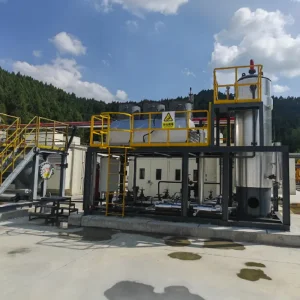
The Detroit metropolitan area and the broader Great Lakes region are undergoing a rapid energy transition. Historically defined by heavy manufacturing, automotive assembly, and intensive logistics corridors, local industries face pressure to decarbonize high-horsepower applications, off-grid power generation, and long-haul shipping. Truck-mounted and skid-mounted Liquefied Natural Gas (LNG) plants have emerged as the leading solution for decentralized, scalable, and highly adaptable fuel provisioning.
Detroit's Local Commercial & Industrial Energy Demands
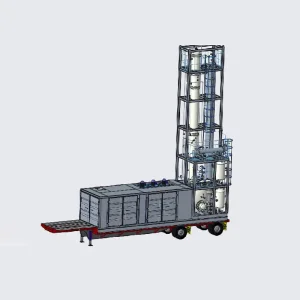
Michigan's strategic positioning along international logistics routes (I-94, I-75) creates a unique market for alternative fuels. Heavy-duty transportation fleets, marine shipping on the Great Lakes, and local peak-shaving utility systems require reliable access to cryogenic liquids. Traditional massive-scale centralized LNG infrastructure requires high capital investment and long construction cycles. Our skid-mounted modular and truck-mounted units address this bottleneck by offering rapid deployment directly at municipal hubs, industrial parks, or peak-shaving facilities in Southeast Michigan.
45%
Carbon Reduction potential vs. Diesel in Heavy Logistics
A2
Pressure Vessel Manufacturing Accreditation
98%
Methane Recovery Efficiency in Scattered Gas Fields
Global Trends in Decentralized Small-Scale LNG (sslng)
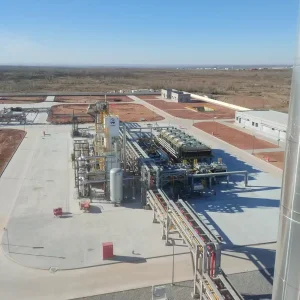
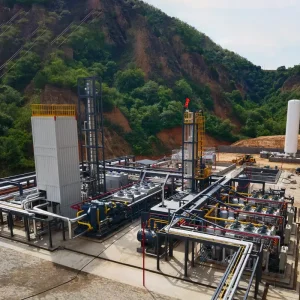
On a global scale, the LNG market is shifting from massive gigawatt-scale liquefaction terminals to micro-scale, flexible distributed units. The key driver is the capitalization of stranded gas assets, flare-gas recovery, and bio-methane (RNG) purification. Modular skid-mounted technology enables project developers to monetize remote gas wells and agricultural biogas sources without the need for billions of dollars in pipeline infrastructure. This technology allows developers to easily scale their operations by simply adding modules in a parallel plug-and-play format.
Engineering Advantages of Hebei Hongke Qingneng Equipment
Under the leadership of our Chairman, Dr. Sun Zhaohu (PhD from the Institute of Physics and Chemistry Technology, Chinese Academy of Sciences), our technical team has engineered cutting-edge cryogenic cycles specifically designed for quick-install modular systems. Our units integrate:
- Advanced Mixed Refrigerant Cycles (MRC): Optimizing heat exchange to reduce specific power consumption (kWh/kg of LNG).
- Flexible Skid Assembly: Robust structural frames designed to withstand road transportation stresses (up to 3G acceleration) without mechanical fatigue.
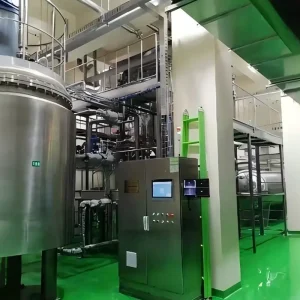
- Dynamic Process Control: Fully automated Siemens PLC-based control panels allowing remote operations, minimal on-site staffing, and rapid shutdown capabilities.
- Multi-stage Purification: In-house designed molecular sieve dehydration and amine wash deacidification systems to handle fluctuating feed gas compositions.
Local Compliance & Safety Standards
Operating cryogenic equipment in North America demands compliance with stringent safety and environmental regulations. Our engineering systems are designed to meet or exceed regional codes:
| Governing Body / Code | Applicability | Hongke Qingneng Compliance Standard |
|---|---|---|
| ASME Sec VIII Div 1 & 2 | Pressure Vessels and Heat Exchangers | A2 Manufacturing License and ASME-certified welding procedures. |
| US EPA / EGLE (Michigan) | VOC and Exhaust Emissions Control | Built-in VOC recovery and zero-venting BOG management. |
| Sinopec / CNPC / ISO9001 | System Safety and Quality Assurance | Certified HSSE management systems and global standard QC audits. |