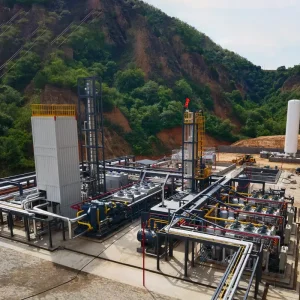
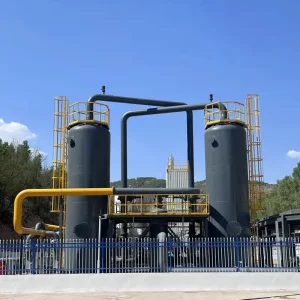
The Czech Republic's industrial sectors—centered heavily in Moravia, Bohemia, and Ostrava—are undergoing a profound transition. To align with national carbon-neutral targets and secure domestic energy resilience, manufacturers are shifting away from traditional lignite assets. High-tech liquefaction plants have emerged as critical infrastructure, bridging the gap between volatile pipeline natural gas imports and reliable local storage networks.
Moreover, the country’s agricultural sector is generating vast potential for Biomethane and Bio-LNG conversion. Implementing skid-mounted gas purification and cryogenic liquefaction plants near large agricultural hubs allows energy developers to establish virtual gas pipelines. These virtual distribution networks deliver liquefied gas directly to off-grid transport hubs and metal processing plants throughout the Czech Republic.
Modern liquefaction plants must sustain optimal thermodynamic efficiency while adjusting to varying raw gas feeds. Our engineering portfolio centers on the Mixed Refrigerant Cycle (MRC), which leverages multiple hydrocarbons (typically nitrogen, methane, ethane, propane, and butane) within a single closed-loop system. This configuration reduces electricity consumption in cooling operations by up to 25% compared to single-component cycles.
| System Module | Process Technologies Applied | Core Performance Metrics | Typical Industrial Target |
|---|---|---|---|
| Pre-Treatment / Purification | Molecular sieve adsorption (dehydration) + amine wash (deacidification) | H₂O < 1 ppm, CO₂ < 50 ppm | Shale gas, raw biogas, wellhead gases |
| Hydrocarbon Distillation | Heavy fraction condensation columns | C5+ extraction efficiency > 99% | Combustion protection, pure methane recovery |
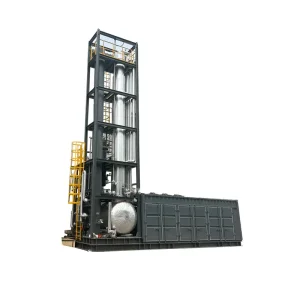
| Cryogenic Liquefaction | Mixed Refrigerant Cycle (MRC) & Cold Box modules | Operating temperature down to -162°C | LNG production, cryogenic nitrogen containment |
| Boil-Off Gas (BOG) Re-condensing | Auxiliary cryo-cooler & compressor feedback loop | Zero-venting continuous recycling | Storage stations, marine terminals, transport hubs |
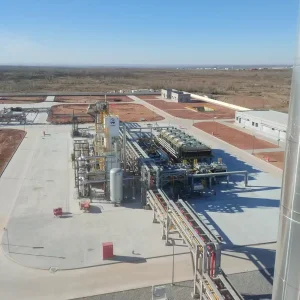
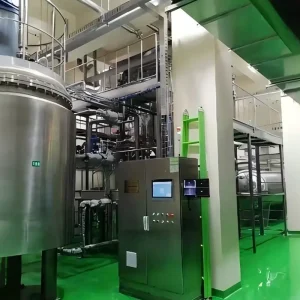
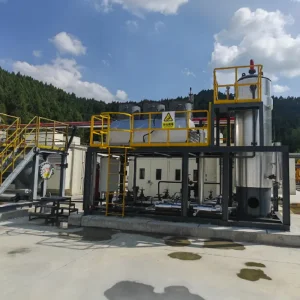
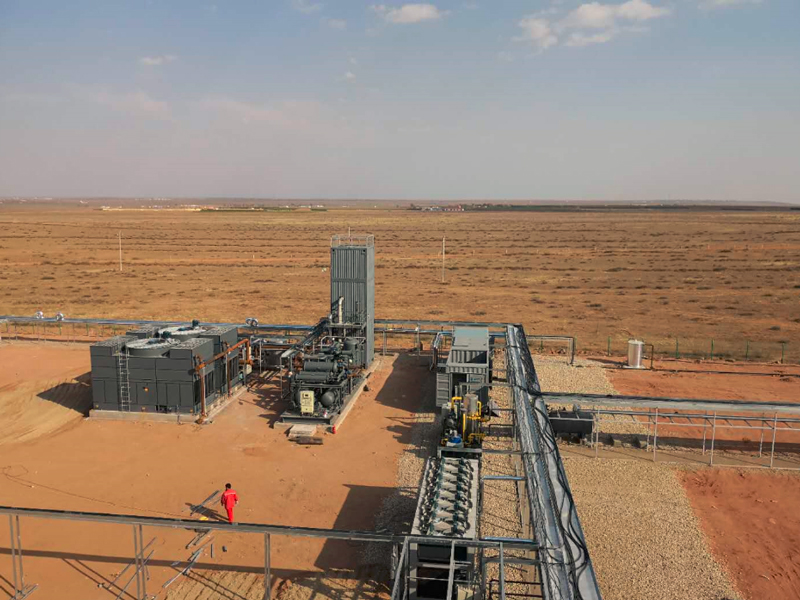
To achieve high operational agility, Hebei Hongke Qingneng Environmental Protection Equipment Co., Ltd. builds skid-mounted systems. By fabricating, pipe-fitting, wiring, and pressure testing the equipment within our specialized factory, we drastically minimize the local construction window in the Czech Republic. Commissioning work on site becomes a streamlined process of structural positioning, utility hookups, and digital process verification.
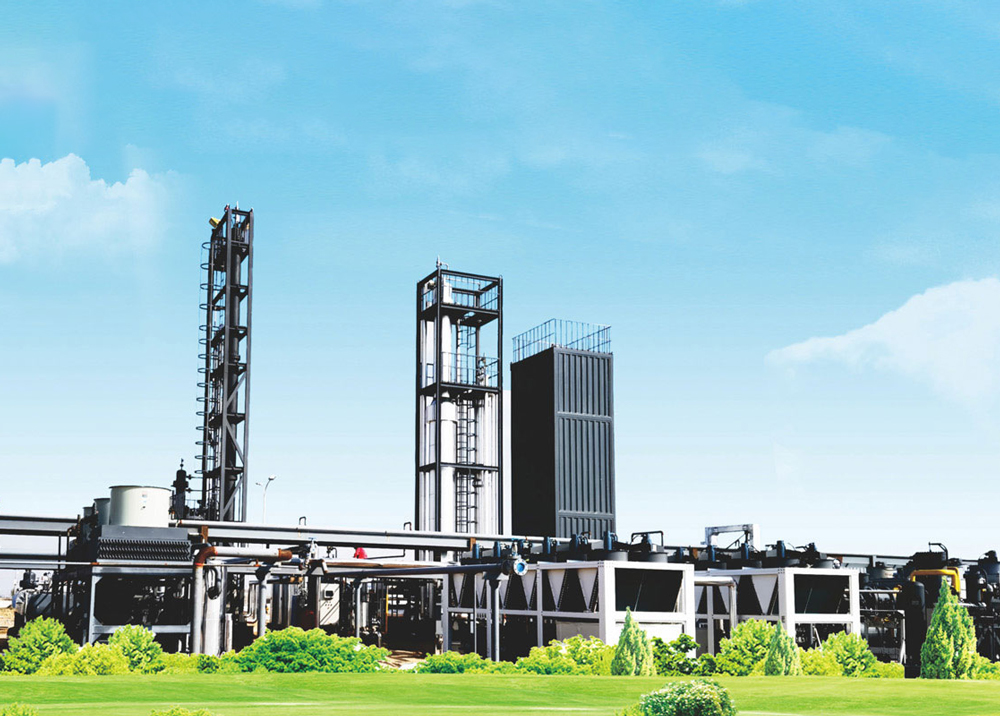
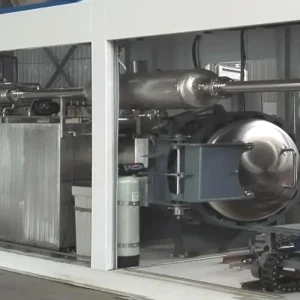
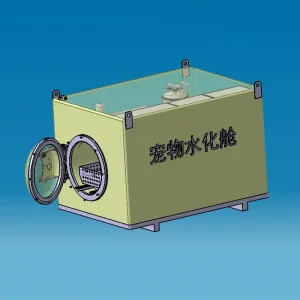
Industrial complexes require holistic eco-protection platforms. Beyond gas liquefaction, our Langfang-based facility engineers robust biological waste management infrastructure. This includes high-temperature steam medical waste treatment systems, animal carcass hydrolysis stations, and industrial VOC removal systems.
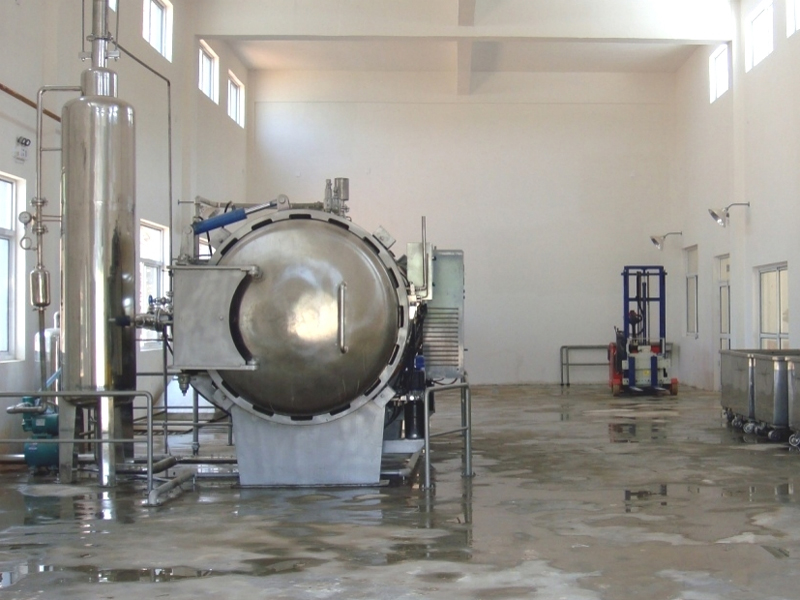
By applying thermal decomposition to animal tissues and high-temperature steam sterilization to pathological medical residues, we neutralize pathogens in accordance with European environmental safety codes. The biogases generated from animal bioprocessing can be scrubbed and directed into our liquefaction skid systems, converting a hazardous process waste stream into a direct source of liquid fuel.
Request Custom Integration BlueprintOur design team consists of doctoral graduates and senior engineers with extensive backgrounds in thermodynamic design, heat exchange simulation, and cryogenic fluid dynamics.
Ph.D. from the Institute of Physics and Chemistry Technology, Chinese Academy of Sciences (CAS). Dr. Sun has led several national strategic programs, including the "863 Program" and major aerospace research initiatives. He has been awarded the First Prize of the Beijing Science and Technology Award for his breakthroughs in cryogenic technologies.
Ph.D. Candidate and Senior Engineer at the CAS Institute of Physics and Chemistry Technology. Dr. Zou has published over 24 peer-reviewed academic papers (including 11 SCI/EI index publications) and holds multiple patents in heat exchange configurations and gas processing.
Doctor of Engineering from the CAS. Dr. Cheng specializes in mixed refrigerant dynamics, phase change thermal transfer, and skid-mounted process optimization. He has directed the commissioning of over 50 large-scale gas purification and liquefaction facilities globally.
Exporting complex thermodynamic equipment to EU countries like the Czech Republic requires strict adherence to European quality frameworks. All our pressure vessels, cold boxes, and automated skids are designed and manufactured in line with the Pressure Equipment Directive (PED) 2014/68/EU and carry corresponding CE marking.
From the initial sourcing of stainless steel plates to final radiographical testing of critical welds, every step is fully documented. Non-destructive testing (NDT), hydrostatic pressure testing, and helium leak detection are performed under third-party inspection protocols. This rigorous documentation ensures seamless integration and approval by Czech regulatory authorities (such as the State Office for Nuclear Safety or regional technical services bureaus).
Answers to key operational, compliance, and engineering questions regarding liquefaction systems in the Central European market.
The energy consumption of a liquefaction plant is highly dependent on the chosen cooling process. Using our optimized Mixed Refrigerant Cycle (MRC), power demand ranges from 0.32 to 0.38 kWh/Nm³ of liquefied gas. This represents an energy saving of up to 25% compared to nitrogen expander cycles, making it highly competitive under the current Czech Republic industrial electricity pricing framework.
Before raw gas enters the cryogenic cold box, it undergoes customized pre-treatment. Our skids utilize a multi-stage process involving chemical/physical solvent scrubbing (for deacidification and CO₂ removal down to < 50 ppm) followed by molecular sieve temperature swing adsorption (TSA) to remove moisture (down to < 1 ppm). This prevents freezing and blockage within the low-temperature plate-fin heat exchangers.
Yes. All pressure-retaining components, columns, and interconnecting piping modules designed for EU destinations comply with PED 2014/68/EU and are manufactured under ISO 9001:2015 quality controls. We provide full material traceability reports (EN 10204 3.1 certs), weld mapping, radiography test reports, and structural calculations to support local registration with Czech inspectorates.
Because our equipment is fully modularized and assembled on structural steel skids within our factory, onsite structural footprints are minimized. A standard 50,000 Nm³/day plant requires roughly 350 to 500 square meters of foundation space. Mechanical hookup, electrical installation, and commission testing are completed within 4 to 6 weeks from delivery at the site.
Every skid-mounted plant is equipped with a Siemens or Allen-Bradley programmable logic controller (PLC) linked to a centralized SCADA interface. This system enables fully automated startup, shutdown, and safety-interlock handling. An optional secure industrial gateway provides remote monitoring and diagnostics, allowing our engineering team to support your operations team in the Czech Republic in real time.
 Hongke Qingneng